
Osteoporosis and joint degeneration are separate diseases that arrive together often enough to be worth planning as one problem. In 2017–2018, the age-adjusted prevalence of osteoporosis at the femur neck, the lumbar spine, or both among US adults aged 50 and over was 12.6%, and low bone mass affected a further 43.1% of that same group.1 If you are being evaluated for a degenerating joint, there is a meaningful chance the bone underneath and around it is also changing.
Key takeaways
- Among US adults aged 50 and over in 2017–2018, osteoporosis prevalence was 12.6% and low bone mass prevalence was 43.1%.1
- Those figures split sharply by sex: osteoporosis affected 19.6% of women and 4.4% of men in that age group.1
- Between 2007–2008 and 2017–2018, osteoporosis prevalence rose among women but not among men.1
- Bone density is one input into bone quality, not the whole of it, which is why a single number does not settle a treatment decision.
- For advanced knee osteoarthritis, PRP is discussed as a bridge therapy prior to arthroplasty. No orthobiologic regrows or regenerates cartilage.
Why the two problems travel together
Osteoporosis is defined by reduced bone strength and increased fracture risk. Joint degeneration involves the cartilage surface, the subchondral bone beneath it, the surrounding tendon and ligament, and the way the joint is loaded during ordinary movement. They are different diseases with a shared demographic and a shared mechanical environment.
The practical consequence is that a plan built only around the joint can miss a fracture risk that is already present, and a plan built only around bone density can leave the symptom that brought you in untouched.
Low bone mass is the larger population
The 43.1% figure for low bone mass among US adults 50 and over is more than three times the osteoporosis figure.1 That is the group most likely to arrive for a joint complaint without knowing anything about their bone status.
The trend is not uniform
Osteoporosis prevalence increased among women between 2007–2008 and 2017–2018 and did not change among men, while low bone mass prevalence did not change for either sex across that period.1 Reporting a single national trend line for both sexes would misdescribe the data.
What we mean by bone quality in an evaluation
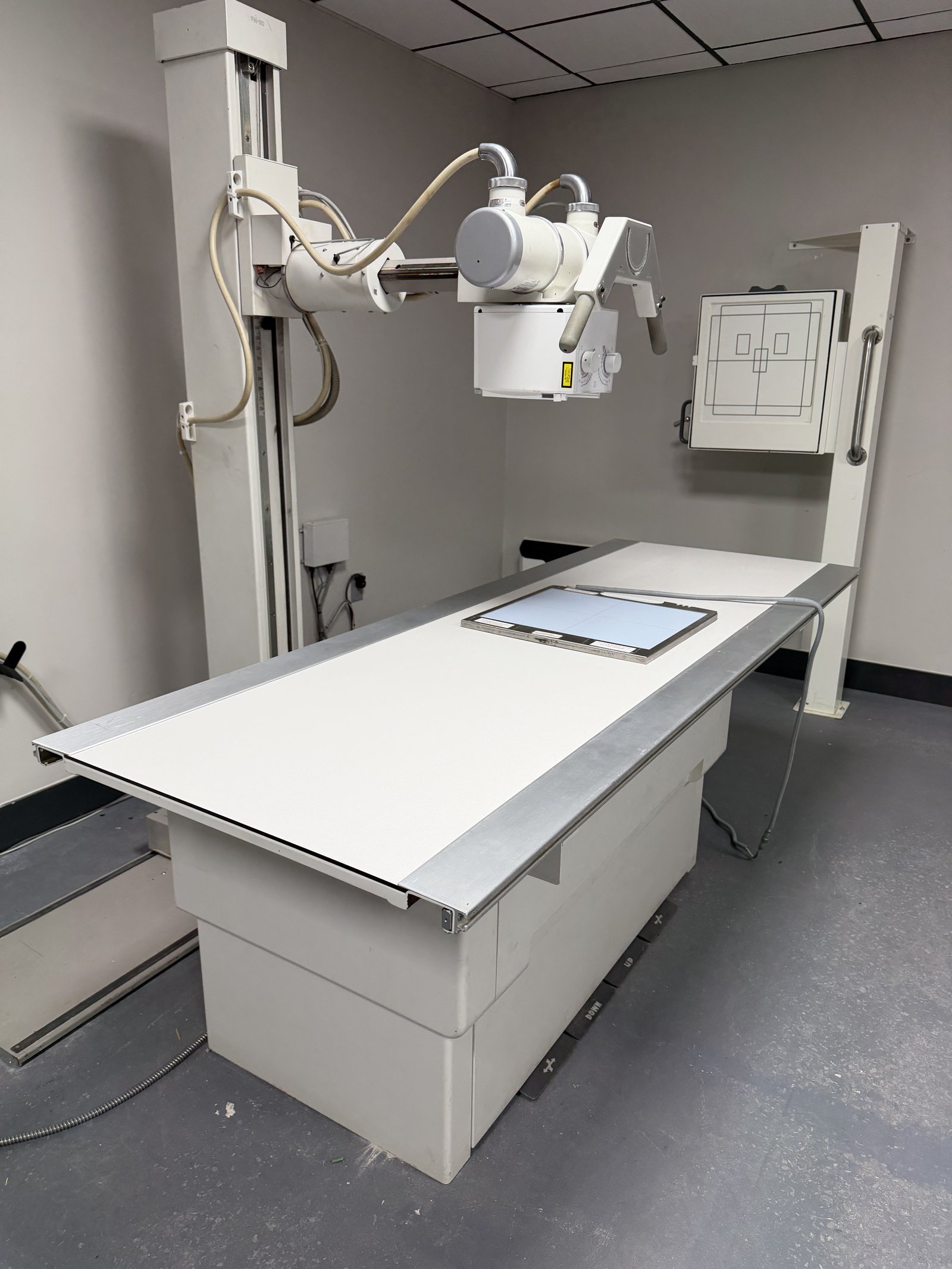
Bone density testing gives a number that is useful and incomplete. Bone quality also includes micro-architecture and tissue-level properties that a single density measurement does not capture, which is why we pair bone screening with the joint examination rather than reading them separately.
Structure, load, and where the pain is coming from
For the degenerating joint we look at symptoms, examination findings, and imaging patterns that suggest where the pain is actually generated. In advanced arthritis, subchondral bone stress is a candidate pain generator alongside the joint surface itself, and distinguishing between them changes the target.
Education is part of the method, not a preamble to it
You are the one who has to live with the decision, so the evaluation is built to leave you able to explain your own anatomy and the trade-offs in front of you. That structure is described in our approach to conservative-first planning.
Where orthobiologics fit, and where they do not
Orthobiologics are considered when the diagnosis and imaging support a specific tissue target, not as a default first move. The categories are genuinely different from one another, and the choice follows the target rather than the label.
PRP, including intraosseous and subchondral delivery
Platelet-rich plasma is delivered into the joint, along tendon, or into bone-adjacent regions depending on where the evidence points in your case. Intraosseous and subchondral approaches come up specifically when imaging and symptoms suggest the bone beneath the joint surface is involved. The full set of options is described under orthobiologic services.
The advanced knee, framed honestly
When imaging shows end-stage change, the useful question is not whether a procedure is technically possible but what it is meant to achieve. For advanced knee osteoarthritis, PRP is discussed as a bridge therapy prior to arthroplasty — a way to manage the interval, not a way to rebuild the joint. The background reading behind that framing is collected in the Regen.MD library.
Bone marrow aspirate concentrate and micro-fragmented adipose
BMAC and Lipogems are separate tools with separate starting substrates, discussed when the indication supports them. They are not interchangeable with PRP and are not an escalation ladder to be climbed automatically.
When conservative care has been exhausted
Regen.MD is conservative-first by design, and Dr. Gurpreet Singh Padda, MD, MBA, MHP is a surgeon. When conservative measures have genuinely been exhausted, surgery is on the table and is discussed directly rather than treated as the end of the relationship. Sequencing matters: surgery follows exhausted conservative care rather than preceding it.
Find out what is actually driving your pain
Regen.MD begins with a physician-led Clinical Evaluation — a review of your history, imaging, and metabolic data, and a written terrain roadmap. Evaluation is contingent upon review of your data.
Questions? Call (314) 295-3000 or text (314) 886-5902.
Frequently asked questions
Does osteoporosis cause my joint pain?
Not directly, and it is worth being precise about this. Osteoporosis is a disorder of bone strength and fracture risk; joint degeneration is a disorder of the joint surface, the bone beneath it, and the soft tissue around it. They frequently coexist in the same person because both track with age, and low bone mass affects 43.1% of US adults aged 50 and over.1
What we evaluate is whether both are present and how each one constrains the plan. The conditions we work through are listed on our conditions page.
If my knee is bone on bone, is PRP still worth discussing?
It can be, but only with the framing the trial evidence actually supports: for advanced knee osteoarthritis, PRP is discussed as a bridge therapy prior to arthroplasty. It is not a repair, and no orthobiologic regrows or regenerates cartilage.
Whether a bridge is useful to you depends on your imaging, your symptom pattern, and what you want the next two years to look like. That evidence is laid out on our bone on bone knee PRP page.
Does bone fragility rule me out of orthobiologic treatment?
It does not automatically rule anything out, but it changes what is reasonable and how procedures are planned. Bone quality is part of the evaluation rather than a footnote to it, and in some cases addressing fracture risk takes priority over addressing joint symptoms.
The same question arises at the hip, where the decision architecture is described on our hip replacement alternatives page.
Where do peptides and longevity medicine fit into a bone and joint plan?
They are discussed as clinical and educational subjects within a physician-directed plan, and they are not sold as products. For patients whose joint symptoms sit alongside a broader metabolic picture, that discussion happens in the same evaluation rather than as a separate conversation.
What that covers is outlined under physician-directed peptide therapy.
Sources
- Sarafrazi N, Wambogo EA, Shepherd JA. “Osteoporosis or Low Bone Mass in Older Adults: United States, 2017–2018.” NCHS Data Brief No. 405, National Center for Health Statistics, March 2021. https://www.cdc.gov/nchs/products/databriefs/db405.htm