
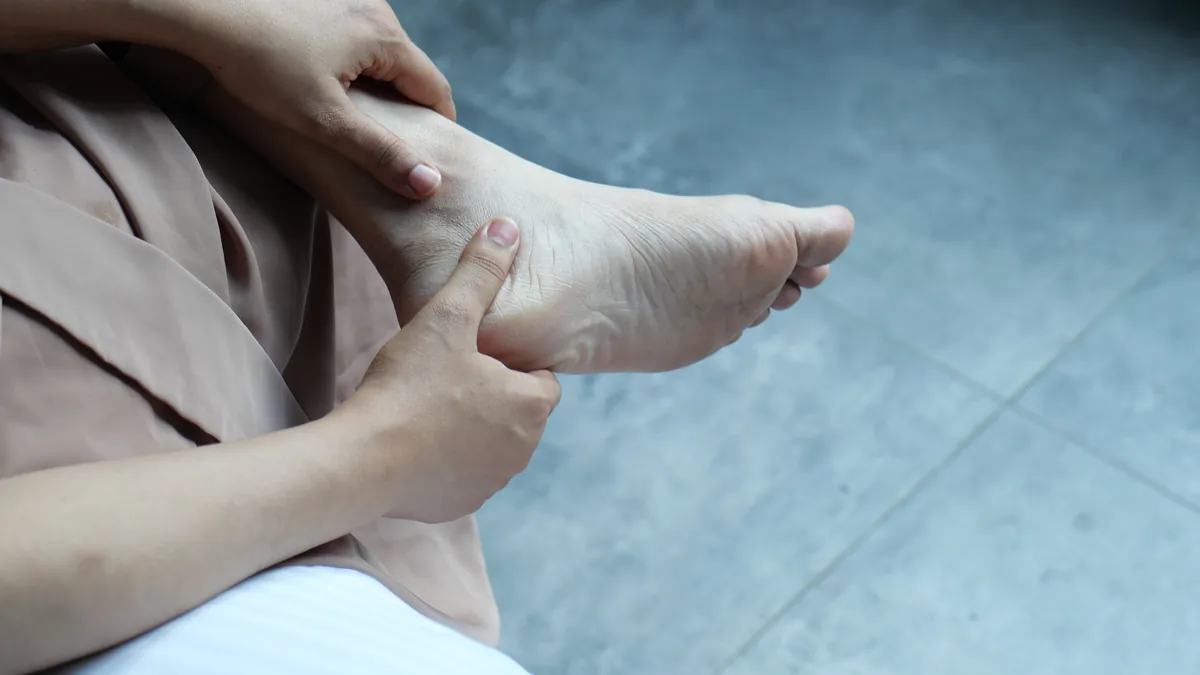
Cortisone makes chronic heel pain worse because the problem is plantar fasciosis. That means wear and breakdown, not inflammation. And cortisone is catabolic: it breaks tissue down. It stops collagen from being made, shuts down repair cells and chokes off blood flow. You get a few weeks of relief while the fascia is quietly taken apart. Repeat shots are linked to fascia rupture and thinning of the heel’s fat pad.
That first step out of bed, like a white-hot blade through the heel, is one of the best-known pains in medicine. It is also one of the most misunderstood. If you have had a cortisone shot for it, there is something you were probably never told. In chronic cases, the shot may work against the tissue it was meant to save.
Is chronic plantar fasciitis really inflammation?
The ending -itis means inflammation. That idea is baked into the name “plantar fasciitis,” and it is the idea that justifies an anti-inflammatory shot.
But in chronic cases, that idea does not hold. What is really there is plantar fasciosis. It is not active inflammation. It is a degenerative breakdown of the tissue itself. The fascia is not inflamed and angry. It is failing and falling apart.
This is not a word game. The two conditions call for opposite treatments. One calls for calming a fire. The other calls for rebuilding a structure. Treating the second as if it were the first is where the trouble starts.
Why doesn’t cortisone fix chronic plantar fasciitis?
Cortisone is a catabolic drug. It breaks tissue down instead of building it up. In particular, it:
- Halts collagen synthesis — the exact process a wearing-down fascia needs to repair itself
- Shuts down repair cells — the healing machinery goes quiet
- Chokes off blood flow — cutting the oxygen and nutrients sent to tissue that is already struggling
The result is a few weeks of real, welcome relief while the structure underneath is quietly taken apart. The pain signal is muted. The problem causing it is not. That is why the second shot often does less than the first, and the third less than the second.
What are the risks of repeated cortisone shots in the heel?
This is not just a theory. Peer-reviewed data links repeat steroid shots to two specific and serious results:
Complete rupture of the plantar fascia. The structure can tear all the way through. A painful but intact foot becomes a foot that no longer works right.
Heel fat-pad atrophy. The natural cushion under the heel bone thins and wastes away. Once that shock absorber is gone, the heel bone takes the load directly. That loss is not easy to reverse.
Both are the kind of harm that is hard to undo. That is why the choice to repeat a shot deserves more thought than it usually gets.
Is plantar fascia surgery a better option?
When shots stop working, fasciotomy, cutting the fascia, is often the next offer. The results call for caution: up to 50% of patients report being unsatisfied after the surgery. And cutting the fascia can flatten the arch it was holding up. That trades a heel problem for a foot-mechanics problem.
What works better than cortisone for plantar fasciitis?
If the fascia is wearing down, the goal is to rebuild it. At Regen.MD that means several things working together:
Orthobiologic therapies — platelet-rich plasma (PRP), microfragmented fat tissue, and platelet lysate — aim to send repair signals into tissue that has stopped repairing itself. On the comparison that matters most, PRP has outperformed cortisone at 6, 12, and 18 months. That is the reverse of cortisone’s quick, fading curve.
Ultrasound guidance, not blind injection. Placing the shot within a fraction of a millimeter into one damaged spot is a different treatment from a shot placed by feel, no matter how skilled the hand.
Metabolic preparation first. A shot is an instruction, and a body in metabolic chaos cannot carry it out. Tuning up the terrain, the inflammatory and metabolic setting the tissue lives in, is what lets the biology respond at all. This idea is behind everything we do. It is why the evaluation comes before treatment.
Which of these fits your foot is a medical question, not a website question. It takes imaging, an exam, and a look at your metabolic markers.
Frequently asked questions
Is cortisone always the wrong choice for heel pain?
No. In truly inflamed, sudden cases, a steroid shot can have a real role. The concern here is specific. It is about using an anti-inflammatory, tissue-breaking drug on chronic degenerative tissue, and repeating it. Whether you have fasciitis or fasciosis decides which case you are in. That takes an evaluation.
I have already had several cortisone shots. Have I done permanent damage?
Not necessarily. It is worth having the tissue really checked, not assumed. Ultrasound can show the state of the fascia and the fat pad directly. What matters most now is not repeating a cycle that has already given you less each time.
Should I stop a treatment my current physician recommended?
Never stop or change a prescribed treatment on your own. Bring these questions to the physician who knows your case, or seek a formal second evaluation. Nothing on this page is a directive to abandon care.
How soon would I know whether a regenerative approach is working?
Tissue repair is measured in months, not days. That is exactly the trade-off. Cortisone gives fast relief that fades. A regenerative approach asks for patience in return for results that last. Individual results vary, and not everyone is a candidate.
Do cortisone injections for plantar fasciitis work?
They ease pain, but only for a while. In chronic cases the heel is wearing down, not inflamed. Cortisone mutes the pain signal without fixing what causes it. You get a few weeks of real relief. Meanwhile, the shot stops collagen from being made, quiets repair cells and cuts blood flow to tissue that is already struggling.
Why did my second cortisone shot not work as well as the first?
Because each shot works against the tissue it is meant to save. Cortisone is catabolic: it breaks tissue down instead of building it up. Every round brings relief while the fascia is quietly weakened. So the second shot often does less than the first, and the third less than the second. That pattern of shrinking returns is the signal to stop repeating it.
Is PRP better than cortisone for plantar fasciitis?
On the comparison that matters most, yes. PRP has outperformed cortisone at 6, 12 and 18 months, the reverse of cortisone’s fast but fading relief. At Regen.MD it is placed with ultrasound guidance into the exact damaged spot, after the metabolic terrain is prepared. Whether it fits your foot takes imaging, an exam and a look at your metabolic markers.
Key takeaways
- Chronic heel pain is usually plantar fasciosis, meaning wear and breakdown, not active inflammation.
- Cortisone is catabolic. It stops collagen from being made, holds back repair cells, and cuts blood flow.
- Repeat steroid shots are linked to plantar fascia rupture and heel fat-pad thinning.
- Fasciotomy has real rates of unhappy patients and can flatten the arch.
- Orthobiologic therapy with ultrasound guidance, on a prepared metabolic terrain, targets the breakdown itself. And PRP has outperformed cortisone at 6, 12, and 18 months.
This article is educational and is not a substitute for evaluation, diagnosis, or treatment by a physician. Individual results vary, and not every patient is a candidate for the therapies described. Do not start, stop, or change any treatment without consulting your physician.
Find out what is actually driving your pain
Regen.MD begins with a physician-led Clinical Evaluation — a review of your history, imaging, and metabolic data, and a written terrain roadmap. Evaluation is contingent upon review of your data.
Questions? Call or text us.
Sources
- Acevedo JI, Beskin JL. Complications of plantar fascia rupture associated with corticosteroid injection. Foot Ankle Int, 1998. PubMed 9498581 · doi:10.1177/107110079801900207
- Rayo-Martín R, Rayo-Rosado R, Rayo-Pérez AM, et al. Comparison of PRP Injections Versus Corticosteroid Injections in Plantar Fasciitis: Systematic Review and Meta-analysis. Foot Ankle Spec, 2025. PubMed 40913486 · doi:10.1177/19386400251363002