
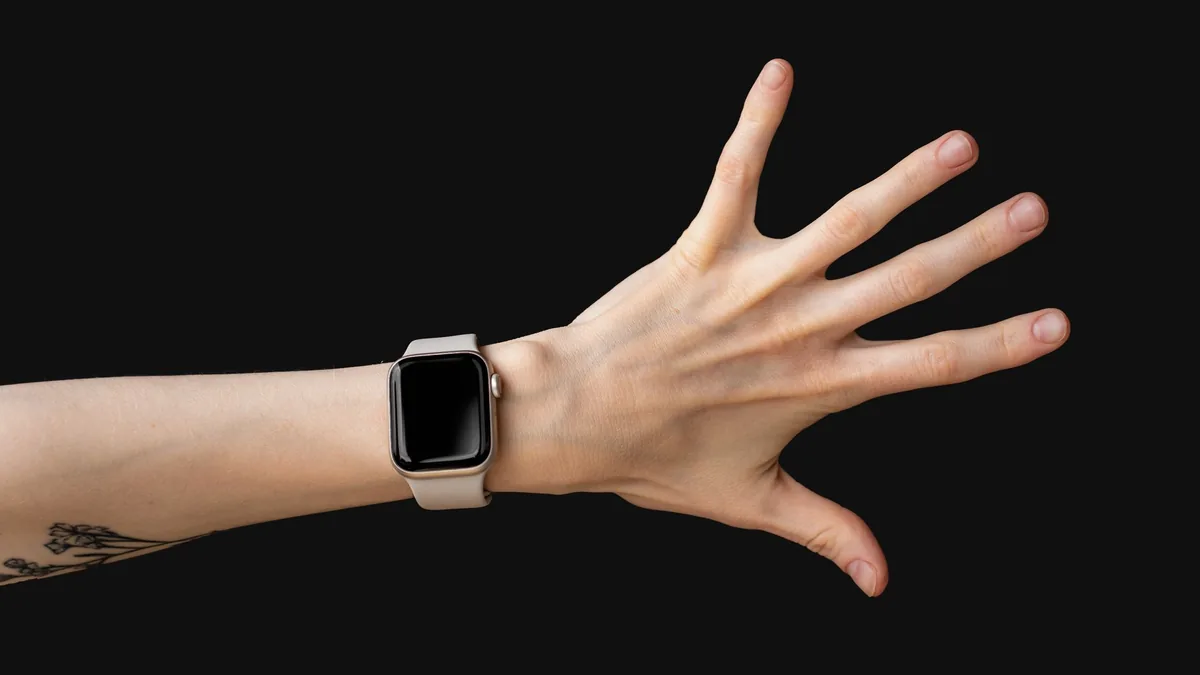
Hand pain keeps coming back after carpal tunnel treatment because the base of the thumb, the CMC joint, is often wearing out too. Treating the nerve while ignoring the joint leaves the mechanical cause in place. We treat the hand as a system. That means ultrasound mapping, hydrodissection to free the median nerve, and PRP to rebuild tendons and ligaments.
You got the diagnosis. Maybe carpal tunnel. Maybe thumb arthritis. One problem was named, one code was billed, and a surgery was booked. What almost surely did not happen is anyone asking whether your hand pain was ever just one problem to begin with.
Can hand pain have more than one cause?
Your hand is not a set of separate parts that happen to share skin. It is a linked system of nerves, joints, tendons, and ligaments, and it acts like one. When one part of that system breaks down, the rest follow. Load shifts. Mechanics change. Structures never built to carry a certain stress start carrying it anyway.
That is why a single-diagnosis label so often describes only the loudest part of a bigger failure. The pinched nerve is real. So is the joint that stopped supporting it.
Why does carpal tunnel pain keep coming back?
Here is the exact pattern that gets missed. If you have carpal tunnel symptoms, there is a high chance the base of your thumb, the CMC joint, is wearing out as well.
That matters because the two are mechanically linked. A thumb base that has lost stability changes how your hand grips, pinches, and takes load. The median nerve does not exist in a vacuum. It runs through a structure whose mechanics are being changed by what is happening at the thumb.
Treating the nerve while ignoring the joint is like changing your spark plugs while the fuel line stays broken. The engine may run better for a while. It has not been fixed.
So the pain comes back. And when it comes back after the conservative steps have been tried, you are told it is time for surgery. Not because anyone rethought the first assessment, but because the ladder only goes one way.
Why does hand care focus on one diagnosis at a time?
This is a problem with the system, not a personal one. No single clinician invented it, and blaming people misses the point.
The model is built around one diagnosis and one billing code per visit. That design is efficient. It is also, by design, blind to problems that span several structures. Payment, paperwork, and scheduling are all organized around one named condition. So the pull is to name one condition. The parts of your hand that do not fit that name become invisible. Not because anyone is careless, but because the system has no slot for them.
Say your real problem spans a nerve, a joint, and the ligaments between them. A framework that can only see one of those will treat one of those. To you, that feels like treatment that keeps almost working.
How are PRP and hydrodissection used for carpal tunnel?
The alternative is not a different injection. It is a different unit of analysis: the hand as a system, not a code.
High-resolution ultrasound that maps the hand in real time. Imaging that shows structures moving under load, in the moment, is a different test from a still picture read against one suspected diagnosis. It lets the exam follow the anatomy, not the referral question. The nerve, the joint, the tendons, and the ligaments each get checked on their own terms.
Ultrasound-guided hydrodissection. Where the median nerve is stuck down by scar-like bands (adhesions), hydrodissection uses fluid to free it from the tissue that is choking it. It takes the pressure off the nerve instead of just cutting the tunnel around it.
PRP as a biological signal, not a symptom mask. Platelet-rich plasma works by calling in your own growth factors to rebuild tendons and ligaments. That is a very different goal from muting a pain signal. Studies show PRP gives better long-term recovery than the short-lived relief of steroids. It is the difference between an order to rebuild and an order to go quiet.
Addressing the joint and the nerve together. Steadying the thumb joint and freeing the nerve in one session is what restores real mechanical balance. Fixing one while the other keeps destabilizing the hand is how you end up back in the same chair a year later.
Whether any of this applies to your hand is a clinical question. It takes an exam, moving imaging, and an assessment of what is actually causing your symptoms. Not a website’s guess.
Frequently asked questions
Does this mean my carpal tunnel diagnosis was wrong?
Not necessarily. Median nerve pressure is a real, well-understood problem, and your diagnosis may be fully accurate as far as it goes. The question here is whether it was complete. In particular, was the base of your thumb ever examined along with the nerve? A correct diagnosis of one structure is not the same as a full accounting of the hand.
Should I cancel the hand surgery I have scheduled?
No. Never cancel or change a procedure your surgeon has recommended based on an article. If the questions here resonate, bring them to the physician who knows your case, or seek a formal second evaluation before your date. Surgery has a legitimate role; the point is that the decision deserves a complete picture of your hand first. Do not start, stop, or change any treatment without consulting your physician.
Why use PRP instead of a steroid injection?
They are trying to do different things. A steroid aims to suppress an inflammation signal. That can give real but short-lived relief. PRP aims to call in your own growth factors to rebuild tendon and ligament tissue. Studies show PRP gives better long-term recovery than the short-lived relief of steroids. Which one fits you depends on what your tissue actually shows.
What does hydrodissection do that surgery does not?
Hydrodissection uses fluid, under ultrasound guidance, to separate the median nerve from the adhesions holding it. It does this without cutting the structures around it. It is a different mechanical strategy than a surgical release, and it keeps your own anatomy. It is not a universal substitute for surgery. An exam and imaging decide whether you are a candidate.
Can carpal tunnel and thumb arthritis happen at the same time?
Yes, and it is the pattern that gets missed most. If you have carpal tunnel symptoms, there is a high chance the base of your thumb, the CMC joint, is wearing out too. The two are mechanically linked. A thumb base that has lost stability changes how you grip and pinch. That changes the structure the median nerve runs through.
What does PRP do for carpal tunnel?
PRP is a biological signal, not a pain mask. Platelet-rich plasma calls in your own growth factors to rebuild the tendons and ligaments that keep the hand in balance, including around an unsteady thumb joint. Studies show it gives better long-term recovery than the short-lived relief of steroids. It is paired with hydrodissection when the median nerve itself is stuck down.
What is the newest approach to carpal tunnel treatment?
The biggest change is not a new shot. It is treating the hand as one system. That starts with high-resolution ultrasound that maps the nerve, joint, tendons and ligaments in real time. Hydrodissection then frees the median nerve from adhesions, and PRP helps rebuild the tissue around it. The thumb joint and the nerve are treated in the same session.
Key takeaways
- The hand is a linked system of nerves, joints, tendons, and ligaments. It does not fail in separate silos.
- Carpal tunnel symptoms often show up alongside wear at the base of the thumb, the CMC joint.
- Treating the nerve while ignoring the joint leaves the mechanical cause in place. That is why the pain returns.
- High-resolution ultrasound can map the whole hand in real time. Guided hydrodissection can free the median nerve from adhesions.
- PRP acts as a biological signal that calls in your own growth factors. Studies show better long-term recovery than the short-lived relief of steroids.
This article is educational and is not a substitute for evaluation, diagnosis, or treatment by a physician. Individual results vary, and not every patient is a candidate for the therapies described. Do not start, stop, or change any treatment without consulting your physician.
Find out what is actually driving your pain
Regen.MD begins with a physician-led Clinical Evaluation — a review of your history, imaging, and metabolic data, and a written terrain roadmap. Evaluation is contingent upon review of your data.
Questions? Call or text us.
Sources
- Dong C, Sun Y, Qi Y, et al. Effect of Platelet-Rich Plasma Injection on Mild or Moderate Carpal Tunnel Syndrome: An Updated Systematic Review and Meta-Analysis of Randomized Controlled Trials. Biomed Res Int, 2020. PubMed 33274213 · doi:10.1155/2020/5089378
- Gao N, Yan L, Ai F, et al. Comparison of the Short-Term Clinical Effectiveness of 5% Dextrose Water, Platelet-rich Plasma and Corticosteroid Injections for Carpal Tunnel Syndrome: A Systematic Review and Network Meta-analysis of Randomized Controlled Trials. Arch Phys Med Rehabil, 2022. PubMed 36529261 · doi:10.1016/j.apmr.2022.11.009