
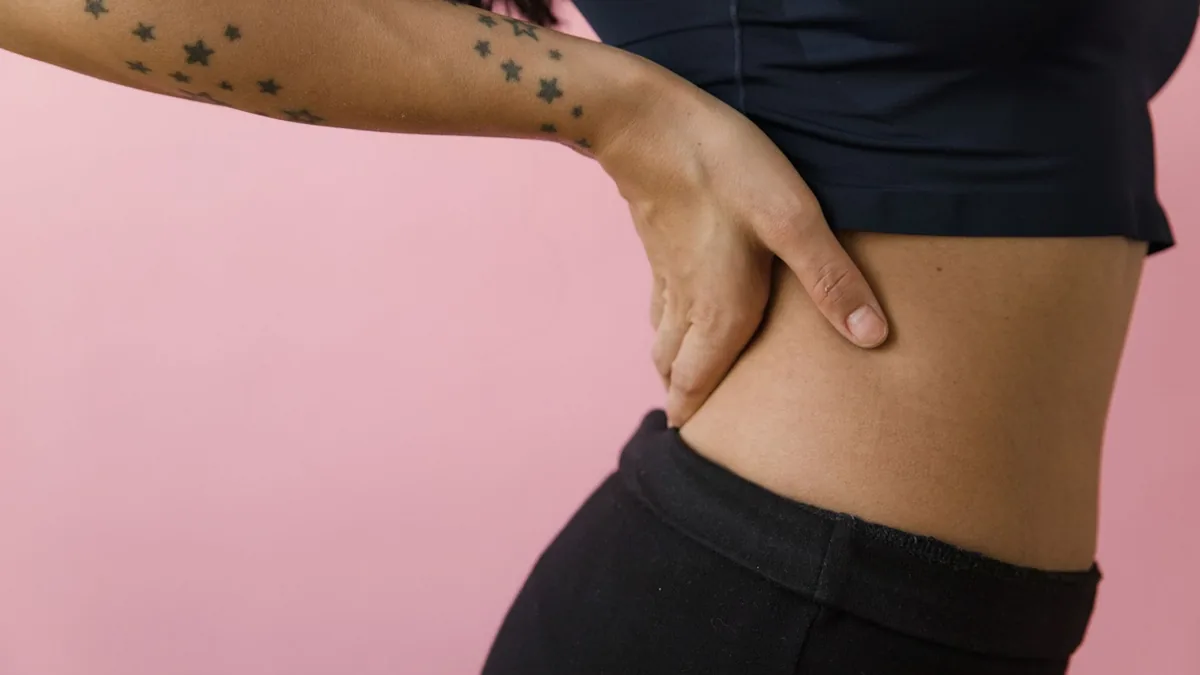
Hip-spine syndrome means your low back pain may be a downstream effect of pelvic or hip instability. Or your hip pain may be a downstream effect of lumbar instability. When the lumbar facets (small joints in the low back) lose stability, the pelvis stops rotating correctly. The bursa gets inflamed, and the piriformis can trap nerves.
You have the MRI. It shows a disc bulge, or a labral tear, or both. You have had the shots, the physical therapy, maybe the surgery. And you still do not have your life back.
The natural conclusion is that something is wrong with your body. Most patients get there in the end. It is usually the wrong conclusion. More often, what is wrong is the way your body is being diagnosed.
Why won’t my back pain heal after injections, therapy or surgery?
“Single-source” medicine pins your pain on one structure, in one area, and treats that. It is efficient. It gets paid. And it is the main thing blocking recovery for many people with chronic low back and hip pain.
The medical industrial complex is paid to treat low back pain and hip pain as separate silos. It often forces one diagnostic code for one procedure. That limit comes from paperwork, not anatomy. Your body never split itself that way. It works as a kinetic chain, where each link moves the next.
So you enter the chase-the-pain cycle. Treat the loudest structure. Get partial relief. Watch it fade. Move to the next loudest structure. Repeat. Each step makes sense on its own. The sequence goes nowhere.
What is hip-spine syndrome?
Here is the mechanism that single-source thinking cannot see.
When your lumbar facet joints lose stability, your pelvis stops rotating correctly. Pelvic mechanics are not a local matter. The pelvis is the hinge between the spine and the legs. When its rotation is thrown off, the way load moves through the hip changes.
That changed load is constant and unnatural. Two results follow directly:
The bursa inflames. The bursa is a small cushion built to cut friction under normal mechanics. Under abnormal mechanics it gets irritated, all the time.
The piriformis traps nerves. This muscle, working under abnormal demand, can squeeze nerves that pass near it. The pain it causes spreads in a pattern that is easy to blame on a disc.
This is hip-spine syndrome: your low back pain may in fact be a downstream effect of pelvic or hip instability. Or your hip pain may be a downstream effect of lumbar instability. The direction has to be found, not assumed.
Treating the back while ignoring the hip, or the hip while ignoring the spine, is like fixing a bent car axle by changing the tire. The tire really was worn. A new one really does help, for a while. And the axle is still bent.
Can an MRI show where back and hip pain is coming from?
An MRI is a still picture. It is very good at showing what a structure looks like while you lie still inside a magnet. It is not built to show how load travels through your pelvis when you stand up and walk.
That gap matters. Disc bulges and labral tears are common findings. They are not automatically the source of a person’s pain. A picture of a flaw is not proof of the pain source. When a still image is the whole basis of a treatment plan, the plan shares the image’s blind spot.
The billing model locks in the blind spot. The single-DRG-code approach does not fit the complex reality of human biology. One code cannot describe a problem that spans the lumbar spine, pelvis and hip. That is a critique of the incentives, not of the doctors working inside them.
How is hip-spine syndrome diagnosed and treated?
Dual-guidance imaging. Our dual-guidance protocol pairs two kinds of imaging. Fluoroscopy (live X-ray) maps bone precisely. Ultrasound shows soft tissue in real time. Fluoroscopy shows the bony frame of the lumbar facets and pelvis. Ultrasound shows bursa, muscle and tendon as living tissue and lets us guide the needle to an exact target as we watch. A low back, pelvis and hip problem is a bone problem and a soft-tissue problem at once. Imaging that shows only one will find only one.
Audit before intervention. The workup finds which way the failure runs. Are pelvic mechanics driving hip damage? Is hip instability loading the lumbar segments? Or are both true? That decides the order of treatment.
Anabolic rather than catabolic. We reject catabolic steroids that weaken your collagen. Tissue already worn down by years of abnormal loading does not need weaker collagen. That is the opposite of the goal. Instead we use orthobiologics — platelet-rich plasma (PRP) and bone marrow concentrate — to trigger a genuine biological repair response.
Refuse the assembly line. Full care across several structures does not fit the single-code model. That is exactly why it has to be delivered outside it.
What applies to your low back and hip is a clinical decision. It takes an exam, a check of how you move and imaging read as part of a system, not as a verdict.
Frequently asked questions
My MRI clearly shows a disc bulge. Isn’t that the answer?
It is a finding, not always the answer. Disc bulges and labral tears show up on imaging often. A still image cannot prove that the flaw it caught is the source of your pain. If treatment aimed at that finding has not held, that tells us something important. Take it seriously.
Modic Changes on Your MRI: Infection, Injury or Terrain? looks at another common MRI finding that is often painless.
Why would my hip cause my back pain, or the reverse?
Because the lumbar spine, pelvis and hip pass load to one another all the time. Lumbar facet instability throws off pelvic rotation. That puts constant abnormal stress on the hip. The bursa gets inflamed, and the stage is set for the piriformis to trap nerves. Pain then shows up far from the structural failure driving it.
The same load-transfer failure between the neck and shoulder is covered in Cervical-Shoulder Kinetic Chain: Why Isolated Treatment Fails.
Should I stop a treatment my current physician recommended?
Never stop or change a prescribed treatment on your own. Bring these questions to the doctor who knows your case, or get a formal second evaluation. Nothing here tells you to drop care you are getting.
What a formal second evaluation involves is described in What happens during a physician-led Clinical Evaluation at Regen.MD.
Why are steroids described as working against repair?
Steroids are catabolic, meaning they break tissue down. They weaken collagen. A joint or soft tissue already breaking down under abnormal load does not need more collagen loss. That works against the result you want, even while the shot quiets the pain for a while.
For why repeated hip cortisone shots stop working, read Hip Cortisone Shots Stopped Working? Here Is Why.
How do you tell if pain is coming from the hip or the back?
You find the direction of the failure before treating anything. The workup asks if pelvic mechanics are driving hip damage, if hip instability is loading the lumbar spine, or both. That takes an exam, a check of how you move and dual-guidance imaging. Fluoroscopy shows the bones of the lumbar facets and pelvis. Ultrasound shows bursa, muscle and tendon.
Can a hip problem be mistaken for a disc problem?
Yes. When the lumbar facet joints lose stability, the pelvis stops rotating correctly and the load through the hip changes. The piriformis, a muscle deep in the buttock, then works under abnormal demand. It can press on nerves passing near it. That makes pain that travels in a pattern easy to blame on a disc, even when the disc is not the source.
What does Regen.MD use instead of steroid shots for hip and back pain?
Orthobiologics. Tissue already worn down by years of abnormal loading is hurt by steroids that weaken collagen. Regen.MD uses platelet-rich plasma (PRP) and bone marrow concentrate to trigger a genuine biological repair response instead. Which treatment fits your back and hip, and in what order, is decided after the evaluation maps how the whole chain is failing.
Key takeaways
- Single-source diagnosis pins your pain on one structure because one code buys one procedure. Your anatomy does not work that way.
- Lumbar facet instability throws off pelvic rotation. That stresses the hip, inflames the bursa and sets up piriformis nerve entrapment.
- Hip-spine syndrome means back pain can come from hip or pelvic instability. The direction has to be found.
- A still MRI cannot show how load moves. That is why imaging findings and pain sources are not the same thing.
- A dual-guidance audit plus anabolic orthobiologics such as PRP and bone marrow concentrate aims at repair, not quieting.
This article is educational and is not a substitute for evaluation, diagnosis, or treatment by a physician. Individual results vary, and not every patient is a candidate for the therapies described. Do not start, stop, or change any treatment without consulting your physician.
Find out what is actually driving your pain
Regen.MD begins with a physician-led Clinical Evaluation — a review of your history, imaging, and metabolic data, and a written terrain roadmap. Evaluation is contingent upon review of your data.
Questions? Call or text us.