
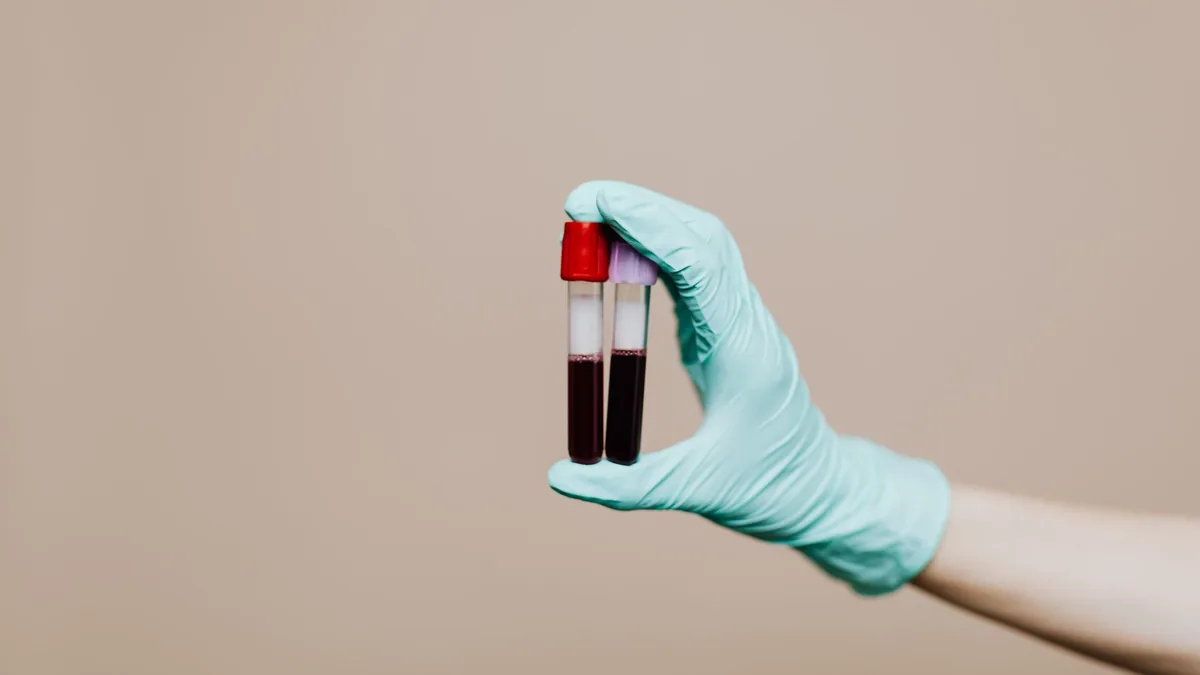
Orthobiologics at Regen.MD in St. Louis are biological repair therapies. We place them using high-resolution ultrasound and live X-ray (fluoroscopy). That way the payload lands in the structure it was meant for. Peptides, hormone optimization and light therapy (photobiomodulation) prepare the terrain so the tissue can act on that repair order.
A fire alarm is going off in the building, and the standard response has been to argue with the alarm. Turn it down. Change the batteries. Tape over the speaker. What almost never happens is someone walking the floors to find out what is burning.
That is the honest shape of a lot of chronic pain care. Your pain is not a diagnosis. It is an urgent signal that your biological terrain has drifted out of balance. A signal that is silenced instead of answered will keep coming back, louder, from more places.
Why “assembly-line” pain management keeps failing the same way
Standard pain care runs like an assembly line. A patient arrives with a location, such as a knee, a low back, or a shoulder. Then they move down a fixed list of treatments tied to that location. Each stop is fast, standard, and aimed at the feeling, not the system causing it.
The problem is not the clinicians on that line. The problem is the design. An assembly line is built to move volume, and moving volume needs every patient to look like the last one. That works for short-term problems that clear up on their own. It works poorly for a body whose chemistry has drifted, because chemistry does not show up on the conveyor belt.
This is what comfort-only mediocrity looks like in practice. The care is technically delivered and reasonable at each step. But it is built in a way that can never ask why the tissue stopped repairing itself in the first place.
Pain as information, not as the problem
Reframe the alarm and the whole approach changes.
If pain is a symptom to snuff out, then the drug that snuffs it out fastest is the best drug, and success means how quiet you are. If pain is information about a system that has drifted, then the question becomes: drifted how, and driven by what?
That second question takes a different kind of clinical work. It takes 30 years of trauma surgery and anesthesiology precision on the structural side, and metabolic science on the chemical side, because the structural failure and the metabolic setting are not two separate problems. They are the same problem seen from two angles.
Tissue that is wearing down is tissue that is not repairing. Something is blocking repair. That “something” is the real diagnosis.
Precision targeting: imaging, not estimation
Placing a biological therapy into the wrong layer of tissue is not a smaller version of the right treatment. It is a different treatment, and often no treatment at all.
At Regen.MD, orthobiologic delivery is guided by high-resolution musculoskeletal ultrasound and fluoroscopy, which is live X-ray. So the biological payload lands with sub-millimeter accuracy in the structure it was meant for. We do not guess at depth or angle from marks on the skin.
This matters more for regenerative therapy than for a numbing drug. A numbing drug spreads out, so it can forgive some error in placement. A biological payload is an order sent to a specific group of cells in a specific damaged spot. Place it a centimeter away and you have given the order to the wrong tissue.
Terrain optimization: tissues cannot heal in a toxic environment
This is the part of regenerative medicine most often skipped. It is also the part that decides whether anything else works.
An orthobiologic injection is an order to repair. A body in chemical chaos cannot carry out that order, no matter how precisely it was delivered. So the environment has to be treated alongside the structure:
Peptides and hormone optimization are used to fix signals that have drifted. Then the repair order arrives in a body able to act on it.
Photobiomodulation, or light therapy, is used to talk directly to your mitochondria. Mitochondria are where the energy for repair is actually made. A cell without enough energy cannot rebuild the tissue’s support framework (the matrix), no matter what growth factors sit next to it.
Together, the aim is to reset the body’s inner chemistry so the tissue lives somewhere that can support regrowth. Building materials work only on prepared ground.
Metabolic sovereignty: you hold the data
The last piece is not clinical. It is about structure, and about who is in charge.
The idea here is that authority over your health belongs to you. Our role is to produce the data and read it honestly. That means imaging, metabolic markers, and a real analysis of what your system is doing. Your role is to make decisions about your own body with that information in hand.
That is slower and asks more of you than being handed a prescription. It is also the only setup in which a patient can truly judge whether a proposed treatment makes sense for them.
Where this care happens
Regen.MD is located at 4477 Woodson Rd, Suite 103, St. Louis, MO 63134, directly adjacent to St. Louis Lambert International Airport. That location is on purpose. The practice is built for patients willing to travel for a specific analytical approach, instead of taking whatever is nearest.
Whether any of these therapies apply to you is a clinical question. It takes an exam, imaging, and a metabolic evaluation, not a website. The entry point is a Clinical Evaluation, starting with an application the physician reviews.
Frequently asked questions
What exactly does “orthobiologics” mean?
It refers to biological therapies for bone, joint and muscle tissue that has stopped repairing itself, placed into the structure that is failing. At Regen.MD they are placed under high-resolution musculoskeletal ultrasound or fluoroscopic guidance for sub-millimeter accuracy. They are paired with work on the metabolic setting the tissue lives in. For most bone and joint uses they are not covered by insurance. They are provided as physician-directed care, not as a guaranteed outcome.
Why do you address metabolism when my problem is clearly a joint?
Because tissues cannot heal in a toxic environment. A worn-down structure and a disordered metabolic terrain are usually the same problem seen from two directions. Treating the joint without treating the chemistry it sits in tends to give a short-lived result at best.
Should I stop the treatment my current physician has me on?
No. Never start, stop, or change a treatment on your own. Bring these questions to the physician who knows your case, or seek a formal second evaluation. Nothing on this page is an instruction to abandon care you are already receiving.
Does this permanently resolve chronic pain?
No, and be suspicious of anyone who promises that. These are physician-directed therapies aimed at changing the biological conditions that let the damage progress. Individual results vary, and not every patient is a candidate.
Key takeaways
- Pain is a signal that the biological terrain has drifted out of balance. It is not a diagnosis in itself.
- Assembly-line pain care is built to treat location, not the system creating the signal.
- At Regen.MD, ultrasound and live X-ray guide each shot to less than a millimeter.
- Fixing the terrain decides whether an injected order can be carried out. That means peptides, hormone care, and light therapy aimed at the cell’s power plants.
- The goal is to give you the data about your own body, so decisions about your body stay with you.
This article is educational and is not a substitute for evaluation, diagnosis, or treatment by a physician. Individual results vary, and not every patient is a candidate for the therapies described. Do not start, stop, or change any treatment without consulting your physician.
Find out what is actually driving your pain
Regen.MD begins with a physician-led Clinical Evaluation — a review of your history, imaging, and metabolic data, and a written terrain roadmap. Evaluation is contingent upon review of your data.
Questions? Call or text us.
Sources
- D’Souza RS, Her YF, Hussain N, et al. Evidence-Based Clinical Practice Guidelines on Regenerative Medicine Treatment for Chronic Pain: A Consensus Report from a Multispecialty Working Group. J Pain Res, 2024. PubMed 39282657 · doi:10.2147/JPR.S480559
- Winkler T, Oehme S, Hildebrandt A, et al. Evidence-based guidelines on orthobiologics. EFORT Open Rev, 2025. PubMed 40459170 · doi:10.1530/EOR-2025-0069