

Returning to resistance training after an orthobiologic procedure goes in stages, not by the calendar. First you get back movement you can handle. Then you add light load. Then you lock it in. Only then do you rebuild toward the program you had before. Your stage is decided by how the treated tissue responds to load, and to the day after load. It is not decided by how long ago the procedure was. The tissue that was treated sets the pace.
This page describes how that progress is set up at Regen.MD. It is not a prescription. It does not replace the written plan you leave your evaluation with.
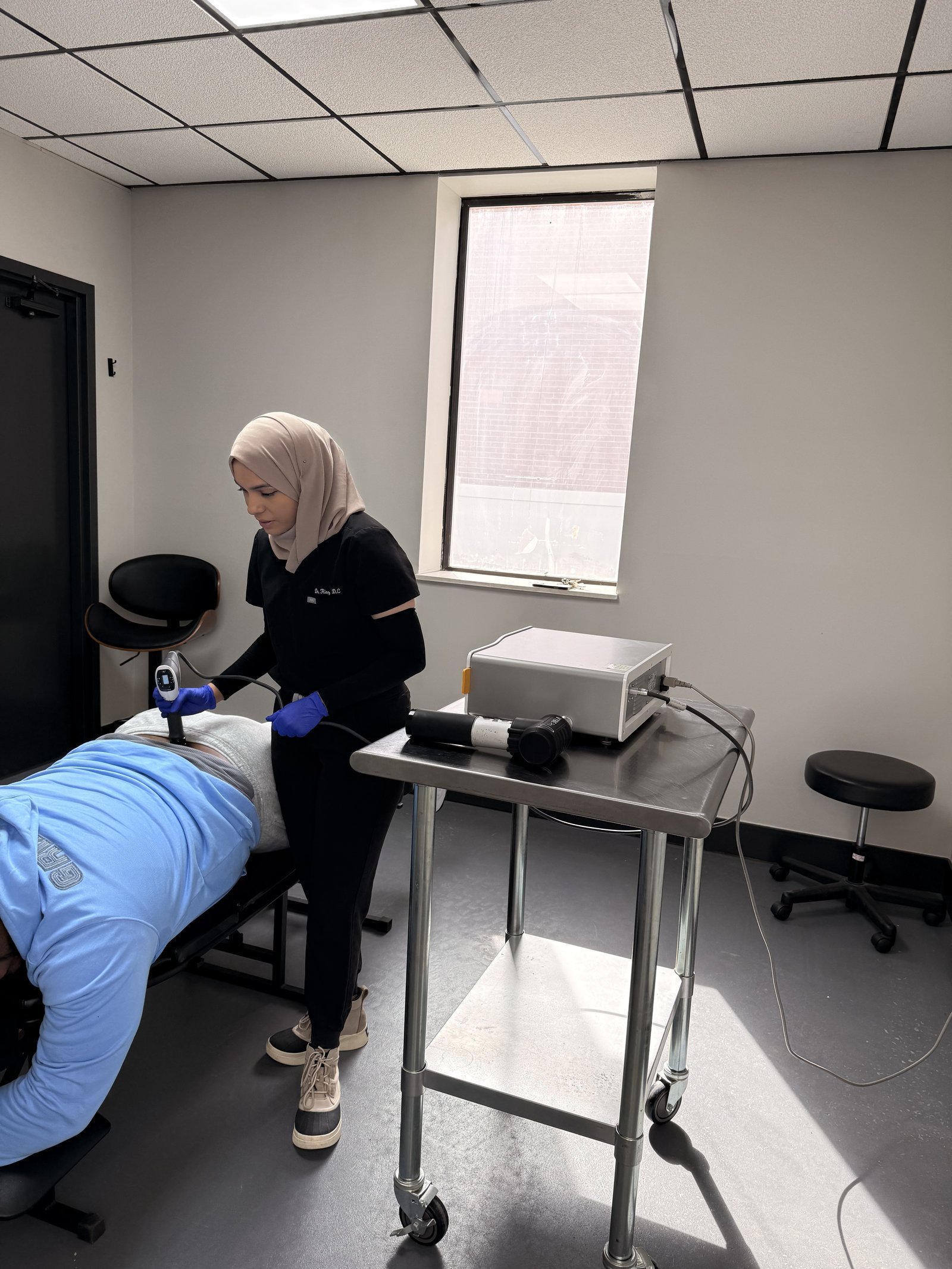
Why does the treated tissue decide when you can exercise after PRP?
The product matters less than the target
Whether you got PRP, bone marrow aspirate concentrate or micro-fragmented adipose tissue matters less to your training plan than where it went. A tendon under repeated pulling load, a joint surface under squeezing load, a target near the bone, and a disc all act differently when you put weight back on them.
You can read how the options differ on our orthobiologics page before your evaluation. That way the talk starts further along.
Tissue-specific considerations we discuss
- Tendon and ligament: a longer phase of building load before heavy multi-joint lifts.
- Joint surface: controlled range and slow load increases, judged by how the joint responds the next day.
- Bone and subchondral targets: protection first, then strength work added on purpose.
- Disc: trunk mechanics and control before load. The bending moves that set off symptoms come back last.
How do you know you are ready to exercise after a PRP injection?
What we check before you load anything
- The treated area handles normal daily movement with symptoms you can manage.
- Your next-day response is steady, meaning symptoms are not climbing after activity.
- You can do low-load moves with correct form and control.
- You know which moves are delayed, changed, or off the list for now.
- You have a written plan for sets, reps, and intensity.
If any of those is missing, the answer is not a lighter version of the program. It is a recheck.
How do you return to lifting weights after PRP, step by step?
Stage one: protect and re-establish motion tolerance
The first stage favors moves you can handle, with low load, a slow tempo, and less range where that feels steadier. Volume is kept low on purpose, so the next-day response stays easy to read.
The mistake at this stage is grinding through discomfort to prove progress. What you are really trying to build is a baseline that repeats.
Stage two: reintroduce resistance at low to moderate intensity
Here the range of exercises widens, while the limits stay guided by symptoms. Technique, stability and steady motion come first. Where they exist, versions of an exercise that put less stress on the treated structure are preferred.
How often you train usually goes up before how hard. Two manageable sessions repeated for a month beat one heavy session followed by a week off.
Stage three: consolidate and rebuild toward your program
Once symptoms and function are steady, strength work moves back toward your usual setup. Load goes up slowly, and weekly volume ramps up with care. Multi-joint lifts return, with form rechecked, not assumed.
Can you lift weights with knee arthritis after PRP?
What we emphasize
- Controlled knee loading: less range and steady technique before deeper bending and heavier weight.
- Strength around the joint: steadily building the hip and thigh muscles to change how load spreads.
- Clear stop rules: a set list of signs that mean ease off, change, or stop for the session.
- Consistency over jumps: big jumps from one week to the next are the most common cause of a flare.
If your goal is to delay joint replacement, note how we frame it. For advanced knee osteoarthritis, PRP is a bridge therapy prior to arthroplasty (joint replacement). It is not cartilage repair. A training plan built on the belief that the joint surface has been rebuilt is built on the wrong idea.
When should you stop exercising after PRP and get reassessed?
Progress should feel controlled. Pause and ask for a recheck if pain gets worse from session to session, or if next-day flares stop settling. Do the same if new instability or catching appears, if swelling or warmth grows after loading, or if function slips.
Regen.MD is conservative-first. Surgery is considered when conservative care has run out. Dr. Gurpreet Singh Padda, MD, MBA, MHP is a surgeon. So if the answer turns out to be surgery, that talk happens within the practice, not as a referral elsewhere.
Why loading is treated here as a biological signal, not as conditioning, is argued in load is the treatment.
For more information, get our free guide to knee pain and treatment options.
Get your return-to-training plan in writing
Regen.MD begins with a physician-led Clinical Evaluation — a review of your history, imaging, and metabolic data, and a written terrain roadmap. Evaluation is contingent upon review of your data.
Regen.MD, 4477 Woodson Rd, Suite 103, St. Louis, MO 63134, next to St. Louis Lambert International Airport. Call or text us.
Frequently asked questions
When can I start lifting again?
When the treated area handles normal daily movement with symptoms you can manage, your next-day response is steady, and you can do low-load moves with control. Those are the readiness signs. They are checked, not assumed from a date on a calendar. The check sits inside our physician-led approach.
Does it matter which orthobiologic I had?
Yes, because the rehab follows the tissue, not the product. A tendon, a joint surface, a target near the bone and a disc each set different limits on how fast load can come back. The differences between the options are described on our orthobiologics page.
I had an intradiscal procedure. What changes about my program?
Training that protects the spine comes first. That means trunk control before load, and slowly bringing back any bending or twisting move that sets off your symptoms. Loaded forward bending of the spine is the move most often brought back too early. The procedure side is described in our intradiscal PRP injection protocol.
What should make me stop and call?
Pain that gets worse session after session. Next-day flares that stop settling. New instability or catching. Swelling or warmth that grows after loading. Or a loss of function, such as walking less far. Any of those is a reason to pause and get rechecked. The conditions we manage this way are listed under conditions.
Will peptides help me get back to training faster?
At Regen.MD, peptides are discussed as clinical and teaching topics. They are not products, and not a way to shorten a rehab program. Nothing here claims that a peptide speeds up your return to lifting. Our framing is set out under physician-directed peptide therapy.
What should I not do after a PRP injection?
Do not grind through discomfort to prove progress. Early on, the goal is a baseline that repeats. Do not make big jumps in load from week to week, the most common cause of a flare. Do not bring back multi-joint lifts without having your form rechecked. And do not train as if the joint surface has been rebuilt, because PRP for advanced knee arthritis is a bridge, not cartilage repair.
Can I exercise after a PRP injection in my knee?
Yes, in stages. Knee work starts with controlled loading: less range and steady technique before deeper bending and heavier weight. Strength work for the hip and thigh changes how load reaches the joint. Each step is judged by how the knee responds the next day. A set list of signs tells you when to ease off, change or stop that session.
Sources
This page describes how Regen.MD structures a return-to-training progression after an orthobiologic procedure. It makes no epidemiological or outcome claim and therefore cites no research finding. The practice pages it draws on are listed below.
- Regen.MD. “Our Approach.” https://regen.md/our-approach/
- Regen.MD. “Orthobiologics — Intraosseous & Subchondral PRP, BMAC, Failed PRP Revision.” https://regen.md/services/orthobiologics/
- Regen.MD. “Intradiscal PRP Injection Protocol.” https://regen.md/intradiscal-prp-injection-protocol/
- Regen.MD. “Conditions.” https://regen.md/conditions/
- Regen.MD. “Physician-Directed Peptide Therapy.” https://regen.md/services/peptide-therapy/