
Recovering from an injury after fifty is harder because of reserve, not age itself. Muscle mass, metabolic flexibility and the power to switch inflammation off all fade with age unless you defend them. Each one can be measured.
Two people are in the same collision. One is thirty-one, the other fifty-eight. Six months later one has forgotten about it and the other is still organizing their week around a shoulder.
The usual answer is age, and it explains nothing. Age stands in for a set of specific things you can measure. Pull them apart and you can act on the gap instead of just regretting it.
Was the damage on my scan there before the injury?
Wear on a scan is close to universal by the sixth decade, and it is usually silent.
- Pooled across 33 studies of people with no symptoms at all, disc wear rose from about a third at twenty to almost everyone at eighty. Disc bulges followed the same curve, from about a third to over four in five.
- In the Chingford cohort — 1,003 women aged 64 to 87, scanned as a general population sample — full-thickness rotator cuff tears showed up in 22.2%, and 48.4% of those tears were asymptomatic.
Two conclusions follow, and taking only one of them is how this argument gets abused. A finding on your scan after the injury may well have been there before it. And a finding that common cannot, by itself, prove it is what hurts, in you, now. About half of them hurt nobody.
The event did not usually create the finding. It used up the margin that had been carrying that finding silently for years.
Why does recovery take longer after 50?
Your body quietly makes up for wear and tear, all day, every day. Reserve is the margin doing that work. It is made of three things, and all three fade with age unless you defend them.
Muscle mass and the strength to use it
Muscle wasting (sarcopenia) removes the tissue that controls where load lands. A joint with less muscle control takes higher, more uneven peak stress from the same activity. After an injury the loss speeds up, because the limb gets guarded at the exact moment it can least afford to sit still.
Metabolic flexibility
Repair is expensive. Picture a body that can no longer switch easily between fuel sources and carries high insulin all the time (hyperinsulinemia). It has less to spend when a big repair bill comes due. That is why a systematic review of risk factors for rotator cuff tendinopathy found that whole-body and metabolic associations, not mechanical load alone, predict the problem.
The capacity to resolve inflammation, not just mount it
This is the half nobody talks about. An older immune system can often start inflammation just fine. It is worse at shutting it off. The shut-off phase is where a short-term response turns into a chronic one. A low-grade inflammatory baseline — the state we call metainflammation — is exactly what jams that shut-off. The mechanism is in Metainflammation.
Why does pain last longer after an injury when you are older?
Older age was one of the four factors that predicted a poor outcome two to three years after a whiplash injury. The others were early disability, pain from cold (cold hyperalgesia) and post-traumatic stress symptoms. Some of that is reserve. Some of it is that a nervous system with a long history of pain, poor sleep and stress starts with the volume turned up before the injury adds more. That is treatable, and it takes a different treatment from the one aimed at the joint — the argument is in when the tissue has healed and the pain has not.
How should injury treatment change after 50?
It raises the value of everything that comes before the procedure, because there is less margin to absorb a poor environment.
- Terrain correction stops being optional. At thirty a strong system will often carry an inflamed environment and heal anyway. At fifty-eight the same environment is often the thing holding recovery back.
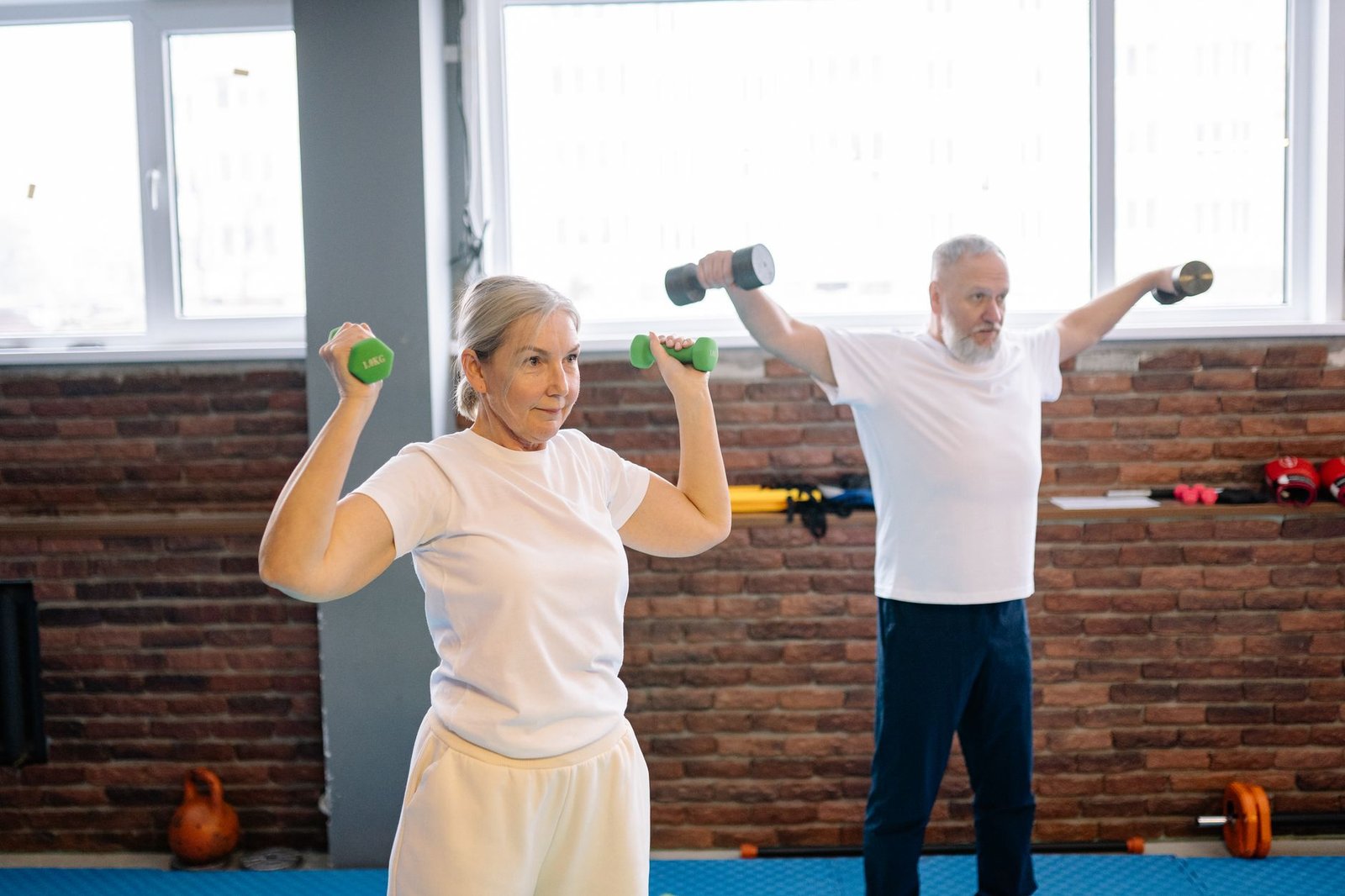
- Resistance training becomes the highest-yield item on the plan. It is the only one that builds reserve and sends the load signal repair needs at the same time, and it keeps working well into later life.
- The long view matters more, not less. About 12% of painful hip, knee and ankle osteoarthritis in the United States follows an injury. An injury at fifty-eight is still a twenty-five-year question.
In a secondary analysis of a randomized trial, body mass index predicted results after microfragmented adipose tissue but not after platelet-rich plasma. Terrain acts through specific mechanisms on specific products. It is a reason to measure, not a reason to assume — which is what the metabolic audit is for.
What we do not say
We do not tell a fifty-eight-year-old that their result is limited by their age. Age is not a treatment target, and saying it ends the conversation. Muscle mass, blood sugar control, inflammatory load, vitamin D status, sleep and nicotine exposure are all treatment targets. Naming them is the difference between a prognosis and a plan.
Frequently Asked Questions
I am fifty-eight and I was told my tear is degenerative. Does that mean the accident did not cause it?
It usually means a finding was there beforehand, which is true of a great many people with no symptoms at all. In a general population cohort of women aged 64 to 87, 48.4% of full-thickness rotator cuff tears caused no symptoms. What changed was capacity, not anatomy, a point discussed in Partial rotator cuff tear: non-surgical and orthobiologic options.
Why did I recover so much more slowly than I did in my thirties?
Because reserve is the variable. Reserve is muscle mass, metabolic flexibility and the power to start an inflammatory response and then shut it off. All of these fade with age unless you defend them. The measurable markers of that decline are in Grip strength and other functional markers of biological aging.
Is it too late to rebuild muscle at my age?
No. Lifting plus enough protein keeps working well into later life. That makes it the highest-yield item on the plan, not a consolation prize. The practical version is in Muscle Loss and Aging: Why Sarcopenia Is a Metabolic Problem.
Should I just have the joint replaced?
Sometimes yes. Where a replacement is truly the right step, it should not be delayed by an alternative that is not working. Where a biologic is a bridge rather than a substitute is set out in Advanced knee osteoarthritis: when PRP is a bridge, not a substitute.
Does age change what an orthobiologic can be expected to do?
It changes the ceiling more than the direction. It also raises the value of correcting terrain first, because there is less margin to absorb an inflamed environment. How that decision is actually made is in When orthobiologics are not the right treatment.
At what age does your body start to heal slower?
There is no single birthday when it happens. What slows recovery is reserve: muscle mass, metabolic flexibility and the power to switch inflammation off. All three fade with age unless you defend them, and each one can be measured. By the sixth decade, silent wear on scans is close to universal. An injury in your fifties often uses up margin that had been quietly covering years of change.
What slows down healing after an injury?
Age by itself is not the target. The things that slow repair are specific and treatable: low muscle mass, poor blood sugar control, insulin that stays high, a high inflammatory load, low vitamin D, poor sleep and nicotine. After fifty there is less margin to absorb any of them. That is why we correct that terrain before or alongside a procedure, not after it disappoints.
Which exercise is best for recovering from an injury after 50?
Resistance training. It is the highest-yield item on the plan. It is the only one that rebuilds reserve and sends the load signal repair needs at the same time, and it keeps working well into later life. Muscle controls where load lands on a joint. A guarded, unused limb loses muscle fastest at the exact moment it can least afford to.
Find out what your recovery is actually limited by
Regen.MD begins with a physician-led Clinical Evaluation — a review of your history, your imaging and your metabolic data, and a written terrain roadmap before any procedure is discussed. Evaluation is contingent upon review of your data.
Questions? Call or text us.
Sources
- Hinsley H, Ganderton C, Arden NK, Carr AJ. Prevalence of rotator cuff tendon tears and symptoms in a Chingford general population cohort, and the resultant impact on UK health services. BMJ Open, 2022. PubMed 36100305 doi:10.1136/bmjopen-2021-059175
- Brinjikji W, Luetmer PH, Comstock B, et al. Systematic literature review of imaging features of spinal degeneration in asymptomatic populations. AJNR Am J Neuroradiol, 2015. PubMed 25430861 doi:10.3174/ajnr.A4173
- Leong HT, Fu SC, He X, et al. Risk factors for rotator cuff tendinopathy: a systematic review and meta-analysis. J Rehabil Med, 2019. PubMed 31489438 doi:10.2340/16501977-2598
- Michels F, Wastyn H, Pottel H, Stockmans F. The presence of persistent symptoms 12 months following a first lateral ankle sprain: a systematic review and meta-analysis. Foot Ankle Surg, 2022. PubMed 34961654 doi:10.1016/j.fas.2021.12.002
- Brown TD, Johnston RC, Saltzman CL, et al. Posttraumatic osteoarthritis: a first estimate of incidence, prevalence, and burden of disease. J Orthop Trauma, 2006. PubMed 17106388 doi:10.1097/01.bot.0000246468.80635.ef
- Sterling M, Jull G, Kenardy J. Physical and psychological factors maintain long-term predictive capacity post-whiplash injury. Pain, 2006. PubMed 16527397 doi:10.1016/j.pain.2006.01.014
- Baria M, George R, Barker T, et al. Relationship of body mass index on patient-reported outcomes after platelet-rich plasma versus microfragmented adipose tissue for knee osteoarthritis: a secondary analysis of a randomized controlled trial. Am J Phys Med Rehabil, 2024. PubMed 38630921 doi:10.1097/PHM.0000000000002499
- Liu Y, Li C, Yang F. Comparative effectiveness of exercise interventions for patellar tendinopathy: a systematic review and network meta-analysis of randomized controlled trials. BMC Sports Sci Med Rehabil, 2026. PubMed 42192475 doi:10.1186/s13102-026-01743-4