
PRP, bone marrow aspirate concentrate and Lipogems cannot be expected to restore a painful sacroiliac joint. No good-quality randomized trial shows any of them works for it. They are an option for some patients only after the joint is proven to be the pain source. Even then, we set clear goals and track the results.
Sacroiliac joint pain is behind about 15% to 25% of reported back pain. And 15% to 25% of axial low back pain comes from this joint [1]. That is pain in the center of the low back. There is still no world-wide set of rules for it. There is no shared step-by-step plan either [2]. So we prove the joint is the pain source first. Only then do we talk about PRP, bone marrow aspirate concentrate, or Lipogems.
Orthobiologics for this joint are fair to discuss. They are wrong to promise. The newest big review of SI joint care says regenerative medicine still needs strong studies [2].
What does SI joint pain feel like?
Patients often feel the pain deep near the buttock or low back. It gets worse with standing, walking, or moving from one position to another, like getting up from a chair. It looks a lot like pain from the lower spine, hip, or pelvis. That is why the symptoms alone cannot make the diagnosis.
The joint moves weight between the legs and the spine [1]. When that job becomes painful, the pain rarely points to one clear source. You have to test for it on purpose.
Why should SI joint pain be confirmed before treatment?
The confirmation gap in real-world practice
A national study looked at 18,032 US patients who had sacroiliac joint fusion between 2010 and 2021. Only 45% had a diagnostic sacroiliac joint injection before surgery. And 18% had already had a lower spine fusion [3]. The average age was 51 years, and 69.8% were women [3].
That 45% figure is why this article starts with diagnosis, not treatment. More than half of those patients signed up for a surgery that cannot be undone. They never had the test that proves the target.
Utilization is rising faster than the evidence
The same study projected a 1,100% jump in US SI joint fusions. That is a rise from 1,350 cases in 2021 to a projected 16,195 by the end of 2028 [3]. The authors said that growth needs clear rules, better ways to diagnose, and firm limits on who qualifies [3].
Does PRP work for SI joint pain?
Platelet-rich plasma
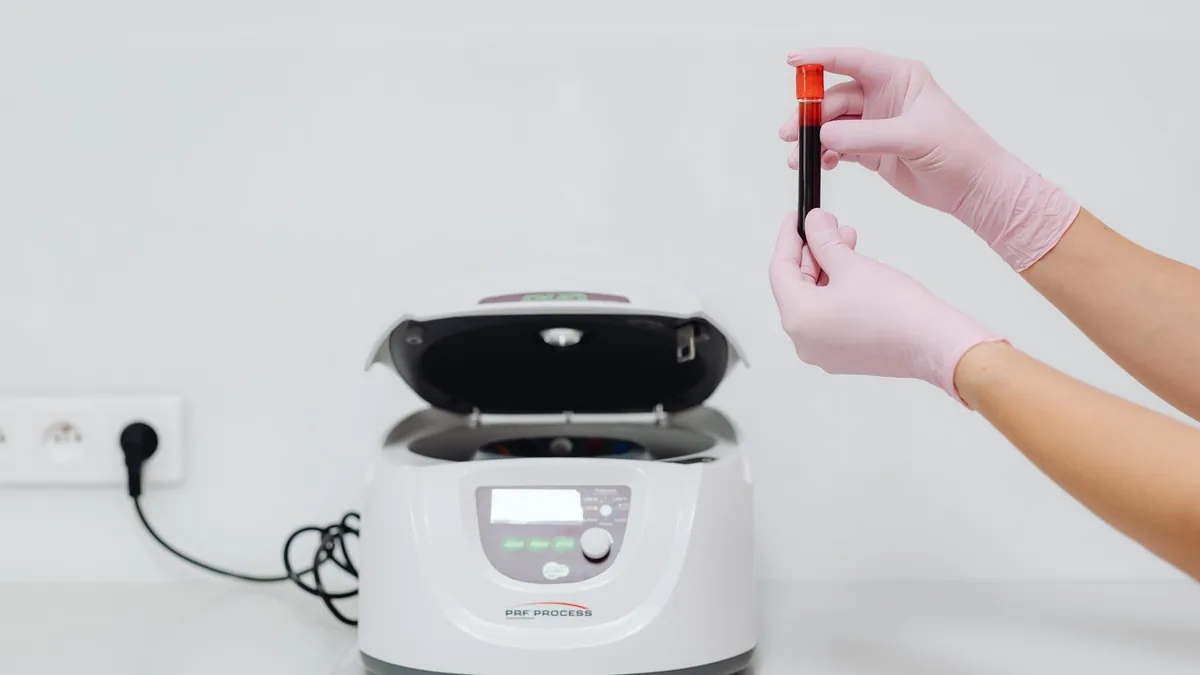
PRP is not one single product. The way it is made, the platelet count, the white blood cell content, and the injection method all vary. That is one reason results are mixed across joint and tendon research. PRP rich in white blood cells and PRP low in them are two different choices. They are not the same thing.
For the sacroiliac joint, we make no claim that PRP restores the joint. It is an option for some patients whose joint has been proven to be the pain source. We set clear goals and track the results.
Intraosseous and subchondral approaches
Intraosseous PRP is put into the bone itself. That is not the same as a shot into soft tissue or the joint space. Whether a target near the bone even makes sense depends on the exam and the imaging. It does not depend on what the patient prefers.
Bone marrow aspirate concentrate and Lipogems
BMAC and Lipogems are part of the orthobiologic tools covered at our orthobiologics service. Which one fits, if any, depends on the proven target and the full plan. It is not a menu item you pick before the workup.
What are the treatment options for SI joint pain?
The 2025 systematic review of sacroiliac care lays out an order. First come the simple steps. These are physical therapy, lifestyle change, and drugs like ibuprofen. Next come X-ray-guided shots and radiofrequency denervation. That uses heat to quiet the nerve. Fusion surgery is usually kept for when the simple steps have failed [2]. That review pooled 15 randomized trials, 13 clinical trials, and 10 look-back studies. In all, it covered 2,666 patients [2].
Regen.MD follows that same order. We do provide surgery when conservative care has run its course. Surgery is never the opening move.
The metabolic terrain around a painful joint
A joint does not heal apart from the body it sits in. Our terrain-first approach checks metabolic markers along with the imaging. That is because tissue asked to heal in an inflamed body responds differently, no matter what is injected into it.
Peptides and longevity medicine are covered here to teach. They are medical topics, not products for sale.
What a Clinical Evaluation covers
First, we review your history, scans, and labs before the visit. Then the doctor walks you through what seems to drive the pain. You get a written roadmap of the steps and tools that fit. Whether orthobiologics belong in that plan comes out of the visit. It is not an assumption going in.
For more information, get our free guide to back pain and treatment options.
Frequently asked questions
Can PRP or BMAC fix sacroiliac joint dysfunction?
No good-quality randomized trial shows that an orthobiologic shot works for SI joint pain. The newest big review says regenerative medicine still needs strong studies. It is an option for some patients after the joint is proven to be the pain source. Our joint dysfunction page explains how we prove it.
Why does the diagnostic injection matter so much?
A national study looked at 18,032 US patients who had sacroiliac joint fusion between 2010 and 2021. Only 45% had a diagnostic SI joint injection before surgery. Signing up for a surgery that cannot be undone, without proving the target, is the mistake we work to avoid. You can read more in the Regen.MD library.
Does metabolic health have anything to do with sacroiliac pain?
Tissue trying to heal in an inflamed body acts differently. So we check fasting insulin, HbA1c, hs-CRP, and lipids as part of the evaluation. Peptides are covered here as a teaching topic too. They are not sold as a product. See physician-directed peptide therapy.
Who performs the evaluation?
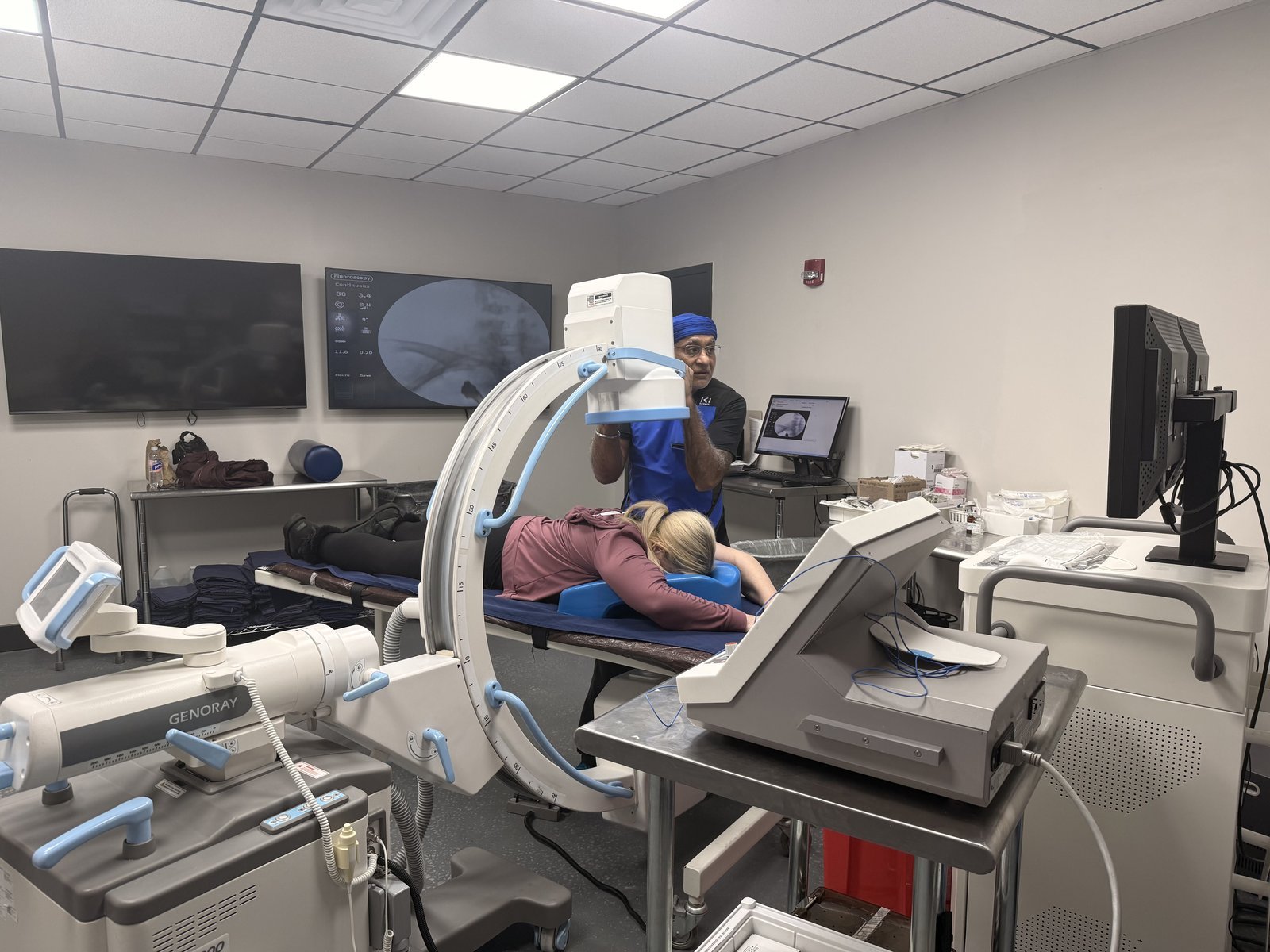
A doctor leads the Clinical Evaluation. Orthobiologic shots are done under live imaging when the target needs it. Training and board certifications are listed on the profile page for Dr. Gurpreet Singh Padda, MD, MBA, MHP.
How do you get rid of SI joint pain for good?
Start by proving the SI joint is the source. Its pain overlaps with the lower spine, hip and pelvis. Then treatment moves in order. Conservative care, physical therapy, lifestyle change and anti-inflammatory drugs come first. Next come image-guided injections and radiofrequency denervation. Fusion is usually kept for cases where those have not worked. At Regen.MD, surgery is never the opening move.
Key takeaways
- Sacroiliac joint pain causes about 15% to 25% of reported back pain and of axial low back pain.
- There is no world-wide treatment plan for SI joint pain. Current reviews say regenerative medicine still needs study.
- Among 18,032 US patients who had sacroiliac fusion from 2010 to 2021, only 45% had a diagnostic sacroiliac injection first.
- US sacroiliac fusions are projected to rise from 1,350 cases in 2021 to 16,195 by the end of 2028. The review authors say that rise is running ahead of the guidelines.
- Conservative care and a confirmed diagnosis come first. Surgery is offered only after conservative care has run its course.
This article is educational and is not a substitute for evaluation, diagnosis, or treatment by a physician. Individual results vary, and not every patient is a candidate for the therapies described. Do not start, stop, or change any treatment without consulting your physician.
Find out what is actually driving your pain
Regen.MD begins with a physician-led Clinical Evaluation — a review of your history, imaging, and metabolic data, and a written terrain roadmap. Evaluation is contingent upon review of your data.
Questions? Call or text us.
Sources
- Aranke M, McCrudy G, Rooney K, et al. “Minimally Invasive and Conservative Interventions for the Treatment of Sacroiliac Joint Pain: A Review of Recent Literature.” Orthopedic Reviews, 2022;14(3). https://orthopedicreviews.openmedicalpublishing.org/article/34098-minimally-invasive-and-conservative-interventions-for-the-treatment-of-sacroiliac-joint-pain-a-review-of-recent-literature
- Migliorini F, Lucenti L, Bardazzi T, Bell A, Cocconi F. “Management of sacroiliac joint pain: current concepts.” European Journal of Orthopaedic Surgery & Traumatology, 2025. https://pubmed.ncbi.nlm.nih.gov/40397173/
- Ton A, Mertz K, Abdou M, Hang N, Mills ES, et al. “Nationwide Analysis of Sacroiliac Joint Fusion Trends: Regional Variations in Utilization and Population Characteristics.” Global Spine Journal, 2025;15(2):518–525. https://pmc.ncbi.nlm.nih.gov/articles/PMC11877661/