
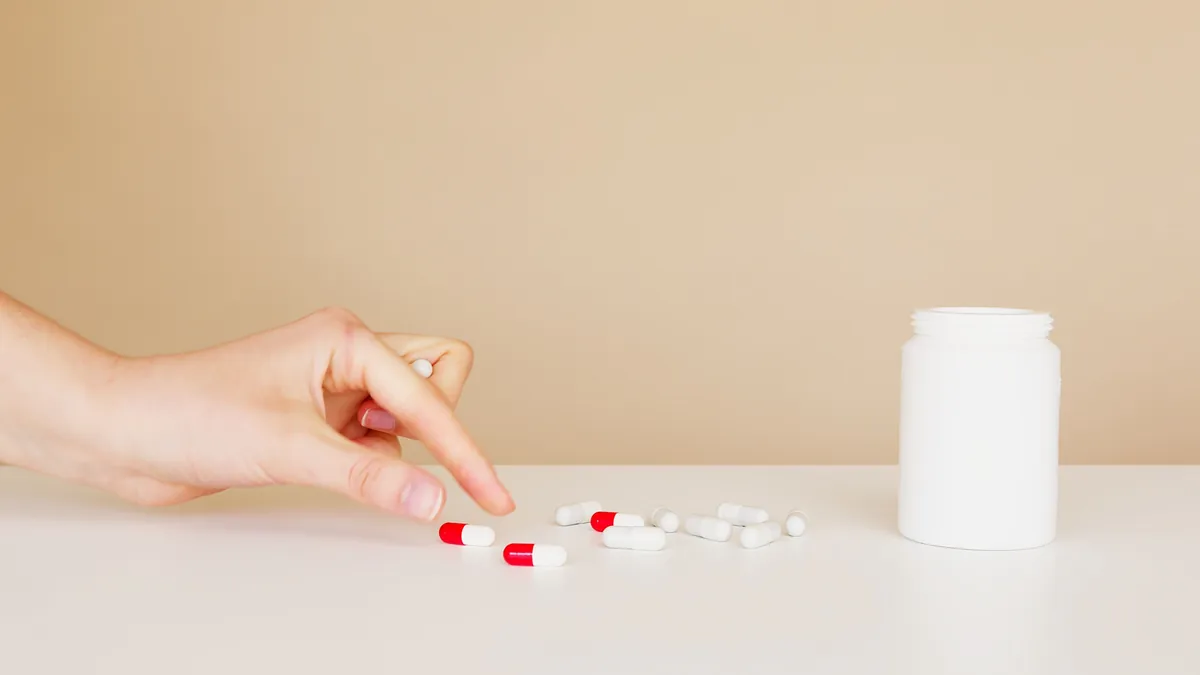
Standard pain management failed you because it was built to manage a symptom over time, not fix it. And its front-line tools fall short. In the SPACE trial, opioids gave no better function than non-opioid care, with more harm. Its map also leaves out the metabolic terrain driving your pain.
The specialists. The scans. The pills. The shots. You did all of it, in the order you were told, and you are still in pain. Now you also carry an extra weight. Nobody says it out loud, but you can feel it in the room: the quiet hint that maybe the problem is you.
It is not. And the reason has nothing to do with how hard you tried.
Why didn’t pain management fix my pain?
Standard pain management did not fail because of you. It failed because of what it was built to do.
Read the name of the specialty word for word. Pain management. The word describes an ongoing state to be handled, not a condition to be solved. That is not an accident of wording. It reflects how the system is built. The model is set up to control a symptom over time. It adjusts doses, books repeat procedures, monitors, fine-tunes, and maintains.
A system built to manage something will manage it. It will do so well, with skilled clinicians and sound decisions at every step. What it will not do is solve the problem, because solving it was never the goal it was built for.
That is why your trip through the system likely felt like motion without arrival. There was always a next step. There was rarely an end point.
Do opioids and repeated steroid shots work for chronic pain?
There is a second problem, and it is more specific. The tools the model leans on hardest do not work as well as their fame suggests.
On opioids. In the landmark SPACE trial, opioids produced no better function than non-opioid care, with more harm. That is a striking result for a type of drug that sat at the center of chronic pain care for decades. Not a little better with more risk. No better on function, and more harm.
On repeated steroids. Repeated steroids lost more cartilage than placebo. Again, the comparison is against an inactive control. And again, the finding goes against the idea that the treatment is at worst harmless.
These are the two tools the model leans on hardest. They are what you were most likely offered, most likely more than once. If a model’s front-line tools fall short in its own controlled tests, then think about a patient who follows that model faithfully and does not improve. That patient has not strayed from anything. They got exactly what the model provides.
Why can’t my doctors find what is causing my pain?
Here is a useful way to think about your own history. You were not finding your way badly. You were finding your way well, with a map that did not show the ground you were standing on.
The standard model’s map puts pain in a structure, like a disc, a joint, or a nerve. It aims treatments at that spot. Every step you took followed it correctly. The specialists you saw read it correctly. The problem is that the map leaves out a whole type of driver. If your pain comes from the missing type, no amount of skilled navigation gets you anywhere.
That missing type is the metabolic terrain. It is not on the map because the model was not built to look for it. So nobody at any point in your journey was required to measure it. That is not because of carelessness. It is because it is not part of the system they work within.
What should I try when pain management is not working?
The alternative is not a better version of the same steps. It is a different question at the start.
A root-cause approach does not ask which structure to target next. It asks what is creating the pain and keeping it going. It treats the metabolic terrain behind the pain as a target you can measure and treat, not as background noise. That new order has results. Testing comes before treatment. Measuring comes before procedures. And the treatments that follow aim at the driver, not at its loudest symptom.
It is slower at the start, and it asks more of you up front. In return, it offers the chance of an end point. That is the one thing the management model, by its own design, was never built to give.
If you have been through the standard path without relief, do not ask a physician what to try next from the same list. Ask whether anyone has ever looked at the factor the list leaves out.
Frequently asked questions
Should I stop the treatments I am currently on?
No. Do not start, stop, or change any treatment without consulting your physician — and this is especially important with medications that require supervised adjustment. Bring these questions to the physician managing your care, or seek a formal evaluation. Nothing here is a directive to discontinue anything on your own.
Does the SPACE trial mean opioids are never appropriate?
The trial finding, as described, is specific. Opioids gave no better function than non-opioid care, with more harm. That compares treatment plans for chronic pain. It argues against opioids as a front-line plan for this group. Decisions about your own medicine belong with the physician who prescribes it.
If it is not my fault, why do I feel like everyone thinks it is?
Because when a model has run its full set of steps and the patient has not improved, the only thing left for it to question is the patient. That is a limit of the system, not a judgment of you. A system that cannot see a driver will blame unexplained failure on whatever it can see.
What does a root-cause evaluation actually measure?
It looks at the metabolic terrain driving the pain, the factor a structure-focused path is not built to catch. It does that alongside the structural exam. Individual results vary and not every patient is a candidate for every approach. What fits your case is decided by an evaluation, not by an article.
Why does pain management feel like it never ends?
Because it was built to manage, not to finish. The model is set up to control a symptom over time. It adjusts doses, books repeat procedures, monitors and maintains. A system built that way always has a next step and rarely an end point. That is why so many patients describe years of motion without arrival, even when every clinician along the way made a sound decision.
Can pain medication fail even when I take it exactly as prescribed?
Yes. In the landmark SPACE trial, opioids gave no better function than non-opioid care, with more harm. And say your pain is driven by the metabolic terrain, not a single disc, joint or nerve. Then treatments aimed at that structure never reach the driver. A patient who follows the model faithfully and does not improve has not strayed from anything.
Are repeated steroid shots a safe long-term plan?
The evidence says no. Repeated steroids lost more cartilage than placebo, and the comparison was against an inactive control. That goes against the common idea that a shot is, at worst, harmless. Steroid shots and opioids are the two tools the standard model leans on hardest. That is why they are what you were most likely offered, most likely more than once.
Key takeaways
- The standard model was built to manage pain over time, not to fix it. It does that job as designed.
- In the landmark SPACE trial, opioids gave no better function than non-opioid care, with more harm.
- Repeated steroids lost more cartilage than placebo. And these are the two tools the model relies on most.
- The metabolic terrain driving pain is not on the standard map. So no one is ever required to measure it.
- A root-cause approach measures first and aims at the driver. That is what makes an end point possible.
This article is educational and is not a substitute for evaluation, diagnosis, or treatment by a physician. Individual results vary, and not every patient is a candidate for the therapies described. Do not start, stop, or change any treatment without consulting your physician.
Find out what is actually driving your pain
Regen.MD begins with a physician-led Clinical Evaluation — a review of your history, imaging, and metabolic data, and a written terrain roadmap. Evaluation is contingent upon review of your data.
Questions? Call or text us.