
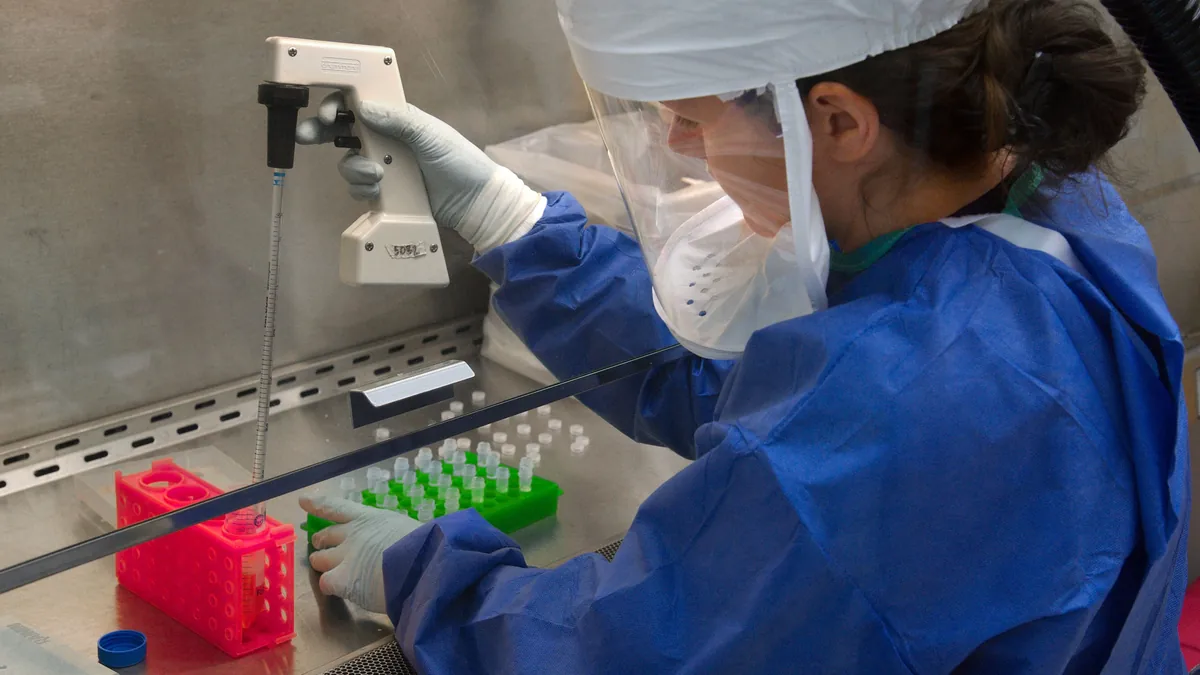
An orthobiologic is prepared from your own tissue. Blood, bone marrow or fat is collected, processed under a set protocol and injected at a chosen spot in the body. Processing rules matter because every step — how the sample is drawn, how long it sits, how it is spun, how it is labeled and handled — changes what ends up in the syringe. Two patients can both be told they got “PRP” and get very different shots aimed at different spots.
That gap between the word and the material is real. A cross-sectional survey asked 357 adult patients at one orthopedic clinic in Chicago, between October 2023 and April 2024. Only 44.0% knew what orthobiologics were at all. And 66.9% of the whole group believed orthobiologics could treat cartilage injuries.
Key points
- “Orthobiologic” is a category, not a product. Platelet-rich plasma is one kind. Bone marrow aspirate concentrate is another. Micro-fragmented adipose (fat) is a third. Each is made in its own way and acts in its own way.
- The delivery route is part of the preparation. Joint, bone, tendon and disc targets are different choices. They are not names for one shot. The formal terms are intra-articular, intraosseous or subchondral, tendon and intradiscal.
- Consistency is the point of a protocol. Standard collection, timing, sterile handling and labeling are what let you compare one treatment in a series to the next.
- Patient expectations are often wrong. Two thirds of surveyed patients believed orthobiologics treat cartilage injuries. That is why the talk about preparation has to happen before consent, not after.
What are orthobiologics?
Orthobiologics is an umbrella term. It covers shots made from a patient’s own blood, marrow or fat. Under that umbrella sit intra-articular and tendon platelet-rich plasma in leukocyte-poor and leukocyte-rich forms. It also covers intraosseous and subchondral PRP. Then bone marrow aspirate concentrate. Then micro-fragmented adipose. Then intradiscal preparations.
They start from different tissues and are handled in different ways. So they are not interchangeable. The question worth asking a clinic is never “do you offer orthobiologics” but “which preparation, prepared how, delivered where, and why that one for me.”
We describe each type, and how we choose, on our orthobiologics service page.
How are PRP and other orthobiologics made?
Informed consent for a preparation made from your own tissue depends on you knowing what is being made. You can fairly ask about each of the steps below before you agree to anything.
Collection and identification
Every preparation from your own tissue starts with a collection. That is a blood draw for PRP, a marrow draw for BMAC or a small fat draw for micro-fragmented adipose. Tracking the sample to you from collection to injection is the basic safety rule. That is because the material belongs to one patient and cannot be replaced.
Controlled processing and timing
After collection, the sample is processed under a set protocol. That means fixed centrifuge settings, fixed gaps between steps and fixed volumes. Timing is not a formality. A sample that waits, or is spun differently, gives a different final product. A protocol exists to stamp out that variation.
Sterility, handling, and quality assurance
A preparation from your own tissue is opened, processed and injected back. So sterile technique and closed handling are central to cutting infection risk. A clinic should be able to describe how it handles samples and what it records about each one.
Delivery route and target
The injection target is a preparation choice as much as a procedure choice. Intraosseous and subchondral PRP go into tissue next to the bone, not into the joint space. Tendon and intradiscal targets are different again. A protocol aimed at an exact target has to be consistent about what reaches it.
Can PRP or other orthobiologics regrow cartilage?
Clear processing is needed for a sound plan. It is not enough on its own. And it does not change what these preparations can do. No orthobiologic has been shown to regrow or regenerate articular cartilage. Any clinic that implies otherwise has gone past what the evidence supports.
For advanced knee osteoarthritis in particular, PRP is framed the way trial authors have framed it. It is a safe bridge therapy before arthroplasty (joint replacement). It aims at pain and function while the surgery decision is made. Careful preparation does not make that goal any bigger.
This is exactly where the survey finding bites. If two thirds of patients arrive believing orthobiologics treat cartilage injuries, an honest account of the preparation is the first chance to fix that belief.
How preparation fits into the clinical reasoning
Preparation standards come after a diagnosis. Before any shot is planned, the real questions are these. Why is the tissue failing? What whole-body and metabolic factors are feeding it? Does a shot address any of them?
At Regen.MD, that review happens first. A doctor reads your history, imaging and metabolic data. The result is a written roadmap, not a procedure booking. You can read how the steps are laid out in our evaluation pathway.
In practice, a well-made biologic injected into a poorly understood problem is still a poorly reasoned plan. Good preparation and sound clinical reasoning are separate needs. Both have to hold.
For more information, get our free guide to knee pain and treatment options.
Questions worth asking any clinic offering orthobiologics
- Which preparation are you proposing, and from which of my tissues?
- What is your processing protocol, and what stays the same from patient to patient?
- What is the injection target, and what imaging guides the needle there?
- What is this meant to achieve, over what time, and what would tell us it has not worked?
- What happens next if it does not work?
A clinic that answers those five plainly is describing a plan. One that answers with category words is describing a sale.
What kind of PRP does Regen.MD use?
We do not leave the recipe questions above open. Regen.MD prepares platelet-rich plasma in leukocyte-poor form — no white blood cells and no red blood cells — and in leukocyte-rich form. We pick the form for the tissue being treated. It is activated with calcium chloride. The platelet level is two to three times baseline, with higher dosing in the six to twelve times range.
The target is a measured dose of more than ten billion platelets per joint. Measured, not assumed. Platelet yield varies between patients and between draws. So a protocol stated only as a multiple of baseline can give two people very different doses on the same day. That is our practice’s standard, not a finding from any single trial.
Frequently asked questions
Why does processing matter if the material comes from my own body?
Made from you does not mean uniform. Variation comes from your biology and from handling. Collection technique, centrifuge settings, timing and sterile practice all shape what is finally injected. A fixed protocol is what makes one treatment comparable to the next. The preparations Regen.MD works with are described on our orthobiologics service page.
What is the difference between intraosseous and intra-articular PRP?
Intra-articular PRP goes into the joint space. Intraosseous or subchondral PRP goes into tissue next to the bone, under the joint surface. That is a different target, and it needs image guidance. The right target depends on your imaging and pain pattern, which we assess during our evaluation pathway.
Can a carefully prepared orthobiologic rebuild my cartilage?
No. No orthobiologic has been shown to regrow or regenerate articular cartilage. Processing quality does not change that. For advanced knee osteoarthritis, PRP is framed as a bridge therapy before joint replacement. The conditions we check on that basis are listed under the conditions we evaluate.
What is BMAC, and how is it prepared differently from PRP?
Bone marrow aspirate concentrate starts from a marrow draw, not a blood draw. It is then concentrated under a set protocol. So the collection step is a procedure in its own right, with its own technique and handling rules. Background reading on these categories is in the Regen.MD library.
Are peptides part of an orthobiologic preparation?
No. Peptides are a separate topic we discuss as clinicians and teachers at Regen.MD. They are not sold as a product or bundled into an injection plan. What that talk covers is described on our peptide therapy page.
Is PRP considered natural?
PRP is made from your own blood, so the starting material is nothing foreign. It is still a processed preparation. The blood is drawn, spun in a centrifuge at fixed settings, handled with sterile technique and injected at a chosen target. At Regen.MD it is also activated with calcium chloride. What you get depends on each of those steps. That is why the protocol matters as much as the source.
Is there a downside to PRP injections?
Any preparation that is opened, processed and injected back carries infection risk. That is why sterile technique and closed handling are central. Preparations also vary: two people told they got “PRP” can receive very different material. And PRP has limits. No orthobiologic has been shown to regrow cartilage. In advanced knee osteoarthritis, PRP is a bridge therapy before joint replacement, aimed at pain and function.
What causes PRP to fail?
Often the plan, not the platelets. A carefully made shot aimed at a poorly understood problem is still a poorly reasoned plan. Other causes sit in the preparation itself. A sample that waits too long or is spun differently gives a different product. Platelet yield varies between patients and draws. That is why we measure the dose and settle the diagnosis before any shot is planned.
Find out what is actually driving your joint pain
Regen.MD begins with a physician-led Clinical Evaluation — a review of your history, imaging, and metabolic data, and a written terrain roadmap. Evaluation is contingent upon review of your data.
Questions? Call or text us.
Sources
- Garcia JR, Pallone LV, Gilat R, et al. What Do Patients Know About Orthobiologics? Perceived Efficacy, Safety, and Factors Influencing Treatment Decisions. Orthopaedic Journal of Sports Medicine. 2026;14(2). https://pubmed.ncbi.nlm.nih.gov/41743451/ (Referenced for: cross-sectional single-center survey of 357 analyzed adult patients at an orthopedic clinic in Chicago, October 2023 to April 2024; 44.0% familiarity with orthobiologics; 66.9% of the cohort believing orthobiologics could treat cartilage injuries.)
- Regen.MD. Orthobiologics. 2026. https://regen.md/services/orthobiologics/ (Referenced for: the orthobiologic preparations offered by this practice — intra-articular and tendon PRP, intraosseous and subchondral PRP, bone marrow aspirate concentrate, micro-fragmented adipose, and intradiscal orthobiologics.)