
PRP injection recovery and diet are one project, not two. Your body does the healing, and high insulin and inflammation slow it down. Start a supervised, whole-food low-carb plan weeks before the injection, not the same week. After it, eat protein at every meal. Check fasting insulin, hs-CRP and uric acid first.
Here is the number we give every patient. The injection is about 10% of your result. The recovery is the other 90%. A platelet does not rebuild a tendon by itself. It sends a signal, and your tissue has to answer. Tissue soaked in sugar and insulin answers slowly.
On October 2, 2026, the Society of Metabolic Health Practitioners published a new guideline on low-carb eating as medical treatment. It was written for diabetes and metabolic disease, not for PRP. Still, it is the clearest map we have for fixing the ground an injection lands in. Dr. Padda holds this society’s Metabolic Health Practitioner (MHP) credential. He did not write or vote on the guideline.
He did not always teach this. For years he was a strict vegetarian who defended the food rules he now rejects. One bite of beef on a bun at Gates Bar-B-Q in Kansas City ended that. He changed his mind because the physiology told him to, and he has changed it in public since.
Does what I eat affect how PRP heals?
Yes. The guideline names three routes, and each one touches healing tissue.
- Insulin. Low-carb eating lowers high insulin and makes the body more sensitive to it.
- Inflammation. It lowers the chemical signals that drive swelling. It also blocks the NLRP3 inflammasome, an alarm switch inside cells.
- Belly fat. Lower insulin lets the body burn visceral fat, the fat packed around the organs.
Dr. Padda reads a PRP injection the same way. The platelets deliver a message. In a joint full of inflammatory noise, that message is a whisper in a loud room. Turn the noise down first, and the same whisper gets heard.
The third driver is not biology. It is the food supply. Bread, cereal and snack food are the cheapest calories on the shelf, so they fill most kitchens. That is a pricing problem dressed up as a willpower problem. The guideline notes that a whole-food low-carb diet costs about the same as a standard diet. It has been used in under-resourced communities.
Which blood tests should I get before a PRP injection?
The guideline lists a basic starting set: weight, waist, blood pressure, a metabolic panel, a lipid panel and HbA1c. It then names extra tests to consider. Several of them matter for healing:
- Fasting insulin or HOMA-IR
- hs-CRP, a marker of inflammation
- Uric acid
- Vitamin D
- An NMR lipid panel with ApoB and Lp(a)
Our own audit goes further. Dr. Padda treats a fasting insulin above 10 µIU/mL as high risk in his clinic. He adds LP-IR, a score that flags insulin resistance before HbA1c rises. He adds GGT, with a cutoff above 20 U/L. That is well below the lab’s “abnormal” line. He also checks oxidized LDL and the omega-6 to omega-3 ratio. Together, those two show how much processed food the body is running on. His target for the omega-3 index is above 8%. These are his clinic’s markers, not the guideline’s. The whole panel is laid out in the metabolic audit.
How long before PRP should I change my diet?
Weeks, not days. The guideline explains why. When carbs drop, insulin falls and the kidneys let go of salt and water. Start-up symptoms begin within 2 to 3 days. They usually pass in a few days. Sometimes they last 2 to 4 weeks. They include headache, tiredness, light-headedness, cramps, poor focus and mood swings.
Now stack that week on top of an injection. A sore, tired patient cannot tell a diet start-up from a reaction to the shot. People often ask why they feel so tired after PRP. If they cut carbs the same week, the diet is part of the answer.
Gout is the second reason to start early. Uric acid can rise in the first weeks of low-carb eating. Ketones and uric acid leave through the same kidney pathway, so they compete. The guideline says the rise settles over 2 to 8 weeks. A person with gout can flare in that window. Your doctor may use a preventive drug, such as colchicine, during the switch. A joint injection and a gout flare should not share a calendar.
For the start-up weeks, the guideline’s fixes are simple:
- Sodium: 2 to 3 grams a day for most people. Salt your food or add salt to bone broth.
- Potassium: 3 to 4 grams a day, from leafy greens, tomatoes, cucumbers and zucchini.
- Magnesium: 200 to 400 mg a day for cramps. Glycinate absorbs well. Skip it if you have kidney disease, are pregnant or have a nerve and muscle disease.
- Fluids: at least 2 liters a day.
What should I eat after a PRP injection?
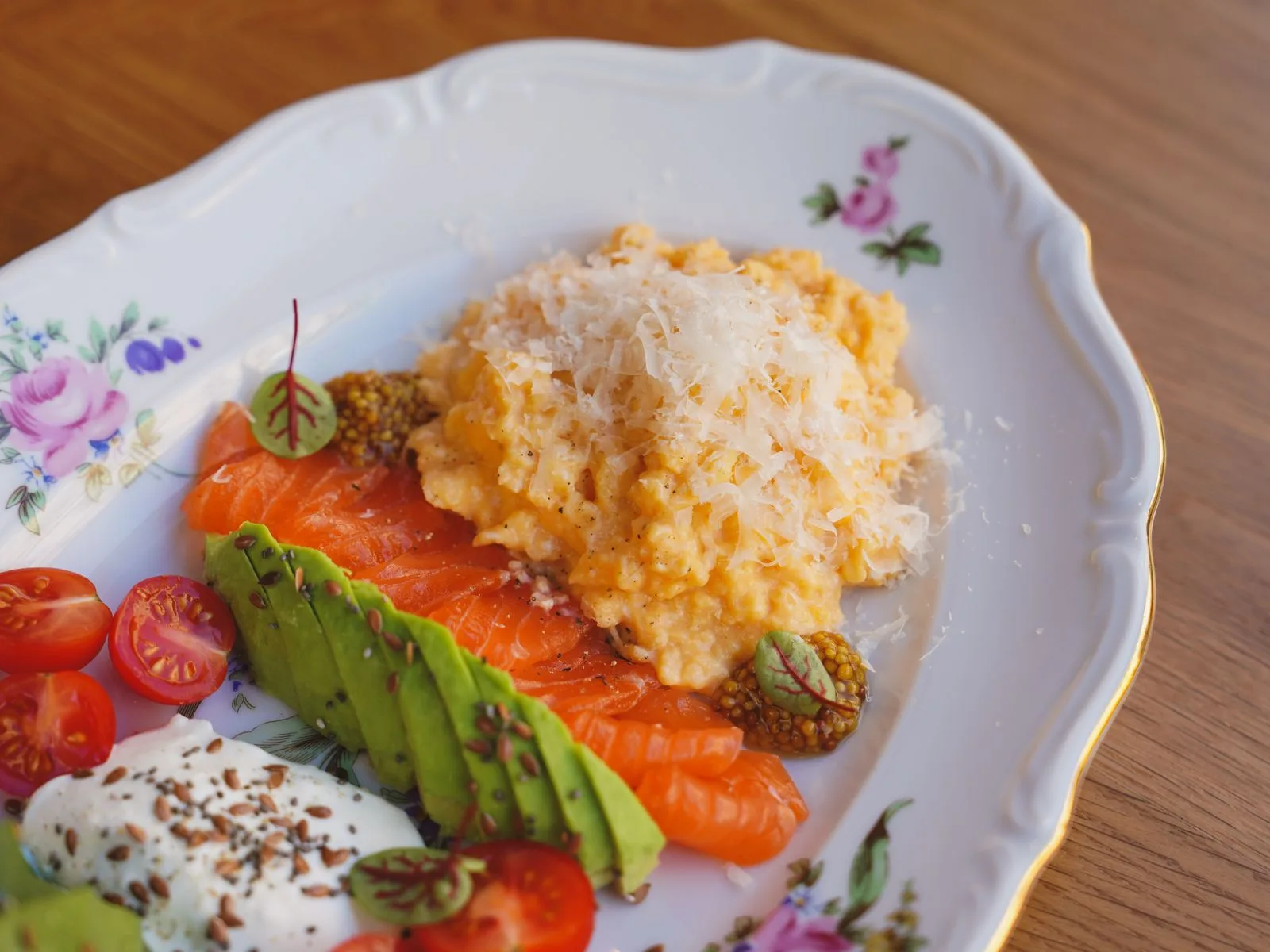
Build every plate around protein. The guideline sets protein first. One way is 25 to 30 grams per meal, three meals a day. Another is 1.2 to 2.0 grams per kilogram of reference weight. Repair is built from protein, so this is where we start. If you have chronic kidney disease, the target drops to about 0.8 grams per kilogram, set with your doctor.
Next, eat fat until you are full. Carbs come from vegetables that grow above the ground and from low-sugar fruit. Think berries, tomatoes, olives and avocados. The guideline’s short list is meat (organ meat included), fish, eggs, full-fat dairy and above-ground vegetables. Leave out bread, pasta, rice, cereal, high-sugar fruit and starchy root vegetables.
Low-carb means under 130 grams of carbs a day. Count total carbs, not “net” carbs. You do not need to count calories.
Our rules sit on top of that. Industrial seed oils come out. Real olive oil stays. Refined grains come out. Red meat and fish are good food for our patients. The guideline does not name seed oils. That line is Dr. Padda’s.
Can I keep taking my medicines?
Do not change any dose on your own. Your doctor makes these moves, especially for insulin, sulfonylureas, SGLT2 inhibitors and blood-pressure drugs. The guideline is blunt about the risk. Insulin is usually cut right away, because the first 2 to 3 days carry the greatest risk of severe lows. Blood-pressure pills often need to come down too, because losing salt and water lowers pressure. Check your blood pressure at home every day. If you have diabetes, check your blood sugar daily as well.
Pain relievers count. The guideline lists NSAIDs and opioid pain medicines among the drugs that can make low sodium worse during a low-carb start. Put them on the list you bring to your doctor, next to your other prescriptions.
GLP-1 drugs are on the guideline’s safe-to-use list with low-carb eating. GLP-1 medicines are peptides. For specific issues, peptides may be part of your solution, chosen after your evaluation.
One more interaction matters for anyone who gets joint shots. The guideline lists corticosteroids, including injected ones, among drugs that can raise blood sugar and block ketosis. Statins are on the same list. A cortisone shot pushes glucose the wrong way. That is one more reason the food plan and the injection plan belong with the same doctor.
A fair note on the document itself. It is expert consensus, not a trial. Twenty-six experts voted, all 18 statements cleared a 70% bar, and 15 were unanimous. The authors did not formally grade the evidence.
So where do I start?
Blood work first, then the food, then the needle. Fix the terrain. Give the start-up weeks time to pass. Then let the platelets land in a body that can answer them. The injection is the small part. The recovery is the part you control, and it starts on your plate. You cannot out-inject a broken metabolism.
For more information, get our free guide to knee pain and treatment options.
Frequently asked questions
Why am I so tired after a PRP injection?
Several things can stack up. If you also cut carbs that week, start-up symptoms add to it. Insulin falls, the kidneys release salt and water, and tiredness and headache can follow for a few days. Salt, potassium and fluids help. Starting the diet weeks before the injection keeps the two apart.
Do I need to be in ketosis for my injection to work?
No. The guideline treats low-carb eating as a range, and ketosis is not always needed for metabolic benefit. Low-carb starts under 130 grams of carbs a day. Ketosis usually starts under 50 grams. Your doctor sets your level from your labs and your goals.
Is ketosis from diet the same as ketoacidosis?
No. Ketosis from diet is a normal state. Your body enters it after an overnight fast. Diabetic ketoacidosis is a different condition. The ketone levels from eating low-carb do not come close to the levels seen when the body makes almost no insulin.
Sources
- Rice SM, Buchanan LA, Calkins MW, Cucuzzella MT, Cywes R, Devine PL, Kalamian M, Kalayjian T, Reynolds DB, Westman EC. A Delphi consensus-based guideline for the implementation of therapeutic carbohydrate reduction in metabolic disorders. Journal of Metabolic Health. 2026;9(1):a152. https://doi.org/10.4102/jmh.v9i1.152