
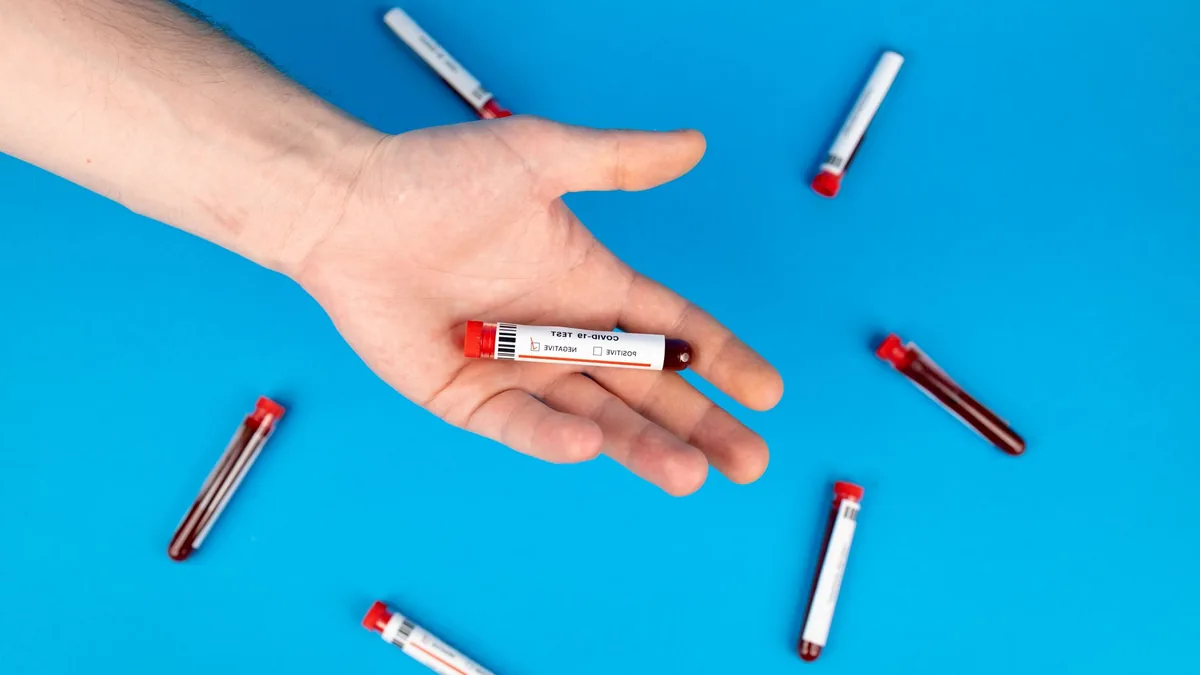
Insurance rarely covers orthobiologic procedures because coverage is a contract decision. A payer makes it against its own written policy. And that decision answers a different question than the one asked in an exam room. The payer is deciding whether a claim matches a policy. Your physician is deciding whether a treatment makes sense for the person in front of him. Those two judgments can point in opposite directions without either one being wrong.
That is not our spin. One large national plan has a current coverage policy for platelet-rich plasma. Its own instructions for use say its coverage policies are “not recommendations for treatment and should never be used as treatment guidelines” [2]. A denial is a statement about policy wording, billing codes, and paperwork. It is not a finding about your joint.
Why won’t insurance pay for a treatment my doctor recommends?
A payer approves a claim against inputs it chose in advance. One is a covered condition. Another is a billing code that maps to it. A third is paperwork the reviewer can audit. The last is an evidence standard the plan picked before your case existed. Orthobiologic shots often fail to match one or more of those inputs, even when the medical reasoning is sound.
A 2025 review looked at the money side of orthobiologics. It covered platelet-rich plasma and concentrated bone marrow aspirate. It says they skip the strict regulatory paths. It names that, along with no standard pricing, as what causes insurance problems and money burdens for patients [1]. The same review reports little research on orthobiologic costs and limited price transparency across the country [1]. When a payer cannot confidently compare one claim to another, the default answer is no.
Payers do not agree with one another either
Researchers took 47 medical devices. Each one was covered by a Medicare national coverage decision issued between February 1999 and August 2013. They checked each one against the public policies of the 16 largest private payers. The national decisions matched the private policies about half the time. They were stricter about a quarter of the time, and looser about a quarter of the time [3]. The authors said patients may get uneven access to medical tools across Medicare and private plans. They also said private plans do not always follow the lead of the Centers for Medicare & Medicaid Services [3].
If a coverage decision measured whether something works, sixteen groups reading the same research would reach the same answer. They do not, because they are not measuring the same thing.
How does the FDA regulate PRP and BMAC?
Orthobiologics fall under the Food and Drug Administration’s Center for Biologics Evaluation and Research. That center oversees human cells, tissues, and products made from them. Many cell treatments must meet its strict rules. But platelet-rich plasma and concentrated bone marrow aspirate are exempt from the stricter pathways [1].
The payer policy describes the same setup from the billing side. It calls platelet-rich plasma a minimally handled product made from your own blood. It notes that the systems used to prepare it are cleared under the 510(k) process. Generally, they make platelet-rich plasma from the patient’s own blood at the point of care or in a lab [2]. What carries a clearance is the equipment that separates the blood. There is no premarket approval of a shot for a joint condition. So there is no approval document a claim can attach to [1].
The same product, different answers by indication
Medicare’s own record on autologous PRP shows how tied to one condition this is. For services on or after April 13, 2021, the Centers for Medicare & Medicaid Services covers autologous PRP for chronic diabetic wounds that will not heal. Coverage lasts 20 weeks. The PRP must be made by devices whose FDA-cleared uses include managing oozing skin wounds [4]. In the same decision, autologous PRP put directly on a closed incision after acute surgery is still not covered nationally. The same goes for wounds that have split open [4]. Coverage beyond 20 weeks, and for every other chronic wound that will not heal, is left to the local Medicare Administrative Contractors [4].
The history of that decision teaches more than the decision itself. The policy was non-coverage in 1992. In 2004 it was still non-covered, except for routine costs inside federally sponsored or approved clinical trials. In 2008 non-coverage spread to more wound types. In 2012 it became covered only inside a clinical research study that met specific rules. In 2021 it became covered outright for one condition [4].
Across three decades, the biology of your own spun-down blood did not change. The approved use, the device clearance, and the pile of evidence did. That is what a coverage call tracks. Our overview of intra-articular, intraosseous, and intradiscal orthobiologic options describes the procedures themselves. How a given plan treats them is a separate question, answered on separate grounds.
The evidence a payer asks for, and who was actually in it
Coverage policies rest on an evidence standard, and that standard keeps rising. One study looked at Medicare national coverage decisions. It adjusted for how strong the evidence was and for other known factors. It found the bar for coverage has gone up. Decisions issued from mid-March 2008 through August 2012 were twenty times less likely to be positive than those issued from February 1999 through January 2002 [5].
The next question is who the qualifying evidence was gathered in. One review sampled 283 randomized controlled trials published in top general medical journals between 1994 and 2006. Common medical conditions were grounds for exclusion in 81.3% of trials. People taking commonly prescribed drugs were excluded in 54.1% of trials. Only 47.2% of all exclusion rules were rated as strongly justified for that trial. Exclusion rules were not reported at all in 12.0% of trials [6].
This matters for a specific reason. Think about the patients this practice sees most. They have metabolic problems, insulin resistance, diabetes, or autoimmune or inflammatory disease. Many have several conditions and take several drugs at once. Many have had symptoms for years and past treatment that did not hold. Those are the very patients trial rules are written to screen out, because screening them out keeps the trial clean. A result found in a group that excluded you is not a result about you. It is also not a result against you. It is silent.
RESTORE: platelet-rich plasma for knee osteoarthritis
This trial was null, and an honest account has to start there. It was randomized and placebo-controlled. The participants, the people giving the shots, and the people scoring the results were all blinded. 288 community-based participants aged 50 or older had painful osteoarthritis on the inner side of the knee. They got three weekly shots into the joint of leukocyte-poor PRP or saline placebo. They were followed for 12 months. Mean change in knee pain was −2.1 points with PRP versus −1.8 with placebo (difference −0.4; 95% CI, −0.9 to 0.2; P = .17). Mean change in cartilage volume on the inner shin bone was −1.4% versus −1.2% (difference −0.2%; 95% CI, −1.9% to 1.5%; P = .81). Of 31 pre-planned secondary outcomes, 29 showed no significant difference between groups. The authors concluded that the findings do not support using PRP for knee osteoarthritis [7].
Who was studied: adults 50 and older. They were found through TV, radio, print and social media, and from university volunteer lists in Sydney and Melbourne. X-ray severity was limited to Kellgren and Lawrence grade 2 or 3, which is mild to moderate disease [7].
Who was screened out: the reported exclusions included whole-body or inflammatory disease, ongoing blood thinners, and a bleeding disorder. They included a platelet count of 150 × 103/µL or lower. They included a steroid shot in the past 3 months or hyaluronic acid in the past 6 months. They included past treatment with a blood product or stem cell shot, and more narrowing on the outer side of the knee than the inner side on X-ray [7]. The published list is called partial, with the full protocol in the trial supplement.
What the design could not capture, in the authors’ own words: results may not apply to other PRP preparations, because preparations vary and are not standardized. Results may not apply to more severe disease, because the trial chose mild to moderate osteoarthritis on X-ray on purpose. And a community sample may not represent patients recruited from medical settings [7]. It also tested one treatment, alone, on a fixed schedule. It did not test staged or combined care.
One finding cuts against reading too much into the exclusions, and it belongs here. Mean body mass index in the two groups was 29.0 and 29.6. Obesity was not an exclusion. The researchers found no sign that body mass index, Kellgren and Lawrence grade, knee swelling, or knee alignment changed the effect on either main outcome [7]. Within the range this trial enrolled, a heavier participant did not do better. That is a real result, and we do not discount it.
The United Kingdom Achilles tendinopathy trial
Also null. This was a randomized trial at 24 National Health Service hospital trusts, with participants blinded. It assigned 240 adults with Achilles tendon pain in the mid-tendon for longer than three months. The problem was confirmed on ultrasound or MRI. Patients got a single PRP shot into the tendon or a sham. The sham was a dry needle under the skin that did not enter the tendon. At six months, mean scores on the Victorian Institute of Sport Assessment–Achilles were 54.4 versus 53.4 (adjusted mean difference −2.7; 95% CI, −8.8 to 3.3). The smallest meaningful difference was 12 points. The authors concluded that the findings do not support this treatment for chronic mid-tendon Achilles tendinopathy [8].
Who was studied: adults 18 and older screened from bone specialist foot and ankle clinics. They had been referred for a surgical opinion and had already had other treatments. Mean age was 52 years, and median symptom length was 24 months [8].
Who was screened out: the stated exclusions included whole-body conditions linked to tendon problems. Diabetes and rheumatoid arthritis were the examples given. They left out people who should not get PRP, such as those on blood thinners or with platelet problems, active cancer, unstable blood pressure or blood infection. They left out past Achilles surgery or rupture on that side, past major tendon or ankle injury, and past PRP into a tendon [8]. Diabetes was named in the exclusion list. A patient with a tendon problem and diabetes was, by the rules, not in this trial.
What the design could not capture, again in the authors’ own words: the shots were not guided by ultrasound. Only a single shot was given, and several shots might have had a different effect. 77 participants sought other treatment during follow-up. And the quality of each sample injected was not checked on its own [8]. Follow-up ended at six months.
What these two trials establish, and what they do not
They show something real, and it is worth saying plainly. In the groups enrolled, using those specific preparations, targets, doses and schedules, PRP given alone did not beat placebo or sham on the chosen main outcomes. Anyone who tells you otherwise is misreading the papers.
They do not show what happens in a different patient. Picture a man with type 2 diabetes and inflammatory arthritis on long-term blood thinners. He has grade 4 X-ray changes and eight years of symptoms. He is treated with a different preparation at a different target, along with metabolic care. The trials did not answer for him. Not because he did better, but because the rules excluded him. That is the usual gap between results under trial conditions and results in practice. It runs both ways. The excluded patient might do better, worse, or the same. What cannot be claimed is that the question was answered.
Where the evidence is accumulating, and why it is still unsettled
A single null trial does not close a field, and this one has not closed. A 2025 systematic review and meta-analysis pooled 26 randomized controlled trials covering 1,650 knees. It compared PRP with hyaluronic acid gel shots in knee osteoarthritis. It found a significant benefit for PRP on the Western Ontario and McMaster Universities Osteoarthritis Index at both 6 and 12 months. It found the same on the visual analogue pain scale at both 6 and 12 months. When results were split by platelet dose at six months, the benefit showed up at certain strength ranges, not across every preparation. The authors rated the work Level 1. They said the findings must be read with the many different preparation methods and categories in mind [9].
Two honest caveats belong with that. The comparison was hyaluronic acid, an active treatment whose own effect is debated, not an inert placebo. And the dose result is exactly the kind of finding that needs to be repeated before it is treated as settled.
What happens next is the clearest example on this page of how a coverage call differs from a medical one. The payer policy sums up that same meta-analysis and reports the same significant gains. Then it declines coverage. It points to mixed ways of making PRP, different hyaluronic acid comparisons, and short follow-up. It also points to results that patients report themselves, and no set regulatory standards [2]. Its stated view is that growth factors from your own platelets are experimental, investigational, or unproven for any use. The same document says claims without a covered code under the policy are denied as not covered [2]. The evidence moved. The coverage did not. The stated reasons were about standards and how long results last, not about whether patients improved.
Combination and sequence, in the population the trials excluded
The trials above tested one shot into one part of the joint. Practice does not work that way, and neither does the smaller research on severe disease. One observational study had 60 patients with severe knee osteoarthritis — Ahlbäck grade III and IV, ages 40 to 80. Some got three weekly PRP shots into the joint. Others got a combination: two shots into the bone under the cartilage, plus three shots into the joint. The joint-only group did not improve on any score at any time point. The combination group improved significantly on all KOOS and WOMAC subscales at 2, 6 and 12 months. The smallest meaningful gain was reached by 16 of 30 combination patients versus 8 of 30 joint-only patients at 6 months. At 12 months it was 14 of 30 versus 5 of 30 [10].
This study must be weighed for what it is. It was observational, not randomized. Patients chose their option after both were explained. That invites the selection and expectation effects a blinded trial is built to prevent. It was one center, with 30 patients per group and no placebo group. It excluded autoimmune rheumatic disease, a joint scope in the year before, hyaluronic acid or steroid shots in the past six months, and bad alignment needing a bone-cutting surgery [10]. It cannot carry the weight a randomized trial carries. It does not show that anything regrows.
What it does add is something the large randomized trials were not built to test. In severe disease on X-ray, the part of the joint that was injected seemed to matter more than whether PRP was used at all. RESTORE enrolled grade 2 and 3 disease and injected the joint space [7]. This group was grade III and IV and reported that the joint space alone did nothing [10]. Those two results fit together, and neither one is a verdict on the other’s patients.
Why “unsettled” is the accurate word
The disagreement in this research is not mainly about honesty or rigor. It is about the fact that “PRP” names a category, not a product. Preparations differ in platelet count, white cell content, whether an activator is used, and how often shots are given [9]. The payer policy makes the same point from the other side. It notes that no standard method for making it exists. That leads to varying platelet counts, varying growth factor content, and varying results [2]. Add different body targets, different schedules, small samples, and groups ranging from screened volunteers to surgical referrals. Then the trials are not measuring one treatment. Until preparation and dose are standardized and reported, pooled results will keep disagreeing. And every reader of them will be partly right.
Why hasn’t anyone run the trial insurers are asking for?
There is a practical reason the final trial keeps not happening. One study looked at the 138 key trials that supported FDA approval of 59 new drugs in 2015 and 2016. It estimated a median trial cost of $19.0 million, with a middle range of $12.2 million to $33.1 million. Trials with placebo or active drug comparisons had an estimated mean cost of $35.1 million. The most costly trials were those that needed more people to detect smaller effects [11]. That figure is for drug approvals, not orthobiologics. It is a sense of scale for what the grade of evidence payers now demand really costs.
Your own blood, drawn and returned in a single visit, has no premarket approval holder behind it. The 2025 money review lists what the field still needs. It needs more research funding, clear guidelines, standard and open pricing, and regulated marketing [1]. Until that money exists, the gap in evidence and the gap in coverage will hold each other in place. Neither one says anything about any one patient.
What an ABN is, and what signing one actually means
Say you have Original Medicare and a service is likely to be denied. Then you get a set document before the service is given. It is the Advance Beneficiary Notice of Noncoverage, Form CMS-R-131. Its legal basis is the Limitation on Liability rule at section 1879 of the Social Security Act. Its job is to show you the money side in advance, not after the fact [12].
A valid notice has to do specific things. It must name the item or service. It must state, in plain words, at least one reason Medicare may not pay. The instructions give examples, such as Medicare not paying for the test for your condition, or not paying for experimental or research use. It must give a good-faith estimate of what you would owe [13].
The form then shows three option boxes, and the difference between them matters. In short, here is how Form CMS-R-131 sets them out [13]:
- Option 1 — you want the service, and you want Medicare billed for an official decision. That decision comes back to you on a Medicare Summary Notice. You must pay if Medicare does not, and you may appeal by following the steps on that notice.
- Option 2 — you want the service but do not want Medicare billed. Because no claim is filed, there are no appeal rights.
- Option 3 — you turn down the service. You owe nothing, and there is nothing to appeal.
Two more points about the form itself. The option box may not be filled in for you. If the office picks it ahead of time, the notice is not valid [13]. And a notice given by choice, for care Medicare never covers at all, should not ask you to pick an option box or sign [12].
What Regen.MD actually does
Regen.MD is enrolled in Medicare and does not submit claims. Not to Medicare, and not to any commercial insurer, for anything. That is the model. It belongs on this page in plain words, so nothing on the form leaves you expecting a claim to be filed for you.
The Advance Beneficiary Notice you get here says you may submit the claim form yourself — the CMS-1500, still widely called the HCFA form — if you choose to. Whether you get paid back is between you and your plan. It may happen and it may not. We do not tell patients which to expect, because we are not the party deciding it.
The practical result is worth saying directly. If you want a payment decision on the record, getting it is yours to pursue. That is a different thing from the medical decision. It is the whole point of this page in miniature.
Where the ABN does not reach
An Advance Beneficiary Notice is a Medicare fee-for-service tool [12]. If you have a commercial plan, you sign our own form here instead. It is our financial-responsibility agreement. It does not carry Medicare appeal rights. Commercial plans set their own terms, and their coverage policies say so directly. Unless a federal or state law says otherwise, your own benefit plan document decides your benefits. That document overrides the general policy [2]. Two people can get the same medical advice and different answers, because their employers bought different plan documents.
How does Regen.MD handle the insurance question?
The first step in care is a physician-led Clinical Evaluation. The coverage talk happens inside it, not after it. We keep two things apart on purpose. One is what a plan is likely to pay for. The other is whether an orthobiologic is a fair option for your case. Those are different questions with different evidence behind them. Mixing them into one does patients real harm in both directions.
We do not treat a denial as a medical finding. We also do not treat a good trial as permission to promise you a result. When a service is not covered, you are told before it is given, in writing, with the reason and the choices laid out. Then you decide. When the evidence for something is thin or disputed, we say which trial, in whom, and what it did not test — the same way this page does.
The flip side matters just as much. Your metabolic terrain, your inflammation load, or your drug list may be why a trial would have excluded you. That is not a reason to skip the work. It is usually the reason to treat the terrain alongside the joint, not instead of it. Our conservative-first order is described in how we evaluate and treat, and surgery is still available when conservative care has run its course.
“My ethos is to treat all of my patients as I would my own family, with the goal of giving them back their quality of life.” — Dr. Gurpreet Singh Padda, MD, MBA, MHP
Bring your imaging and your labs to a physician
Regen.MD begins with a physician-led Clinical Evaluation — a review of your history, imaging, and metabolic data, and a written terrain roadmap. Evaluation is contingent upon review of your data.
Questions? Call or text us.
Frequently asked questions
If my insurance denies an orthobiologic, does that mean it does not work?
No, and the payer papers say so themselves. One large national plan’s policy says its coverage rules are not advice on treatment. It says they should never be used as treatment guides. The same policy says no to coverage while it sums up a 2025 review of 26 randomized trials. That review found PRP did better than hyaluronic acid at 6 and 12 months. Coverage follows the legal path, billing codes, standards and policy wording. Summaries of the studies we rely on, including the null ones, are collected in the library.
What is an ABN, and what does signing one commit me to?
An Advance Beneficiary Notice of Noncoverage, Form CMS-R-131, is the Medicare fee-for-service document you get before a service that is expected to be denied. It must name the service and give a plain-words reason Medicare may not pay. It must carry a good-faith cost estimate, and the option box may not be filled in for you. One point is specific to us. Regen.MD is enrolled in Medicare but does not submit claims, to Medicare or to any commercial insurer. The notice says you may submit the claim form yourself — the CMS-1500, still widely called the HCFA form — if you choose to. You may or may not get paid back. Patients with commercial plans sign our own financial-responsibility form instead, which carries no Medicare appeal rights. The form is reviewed with you at our St. Louis office on Woodson Rd.
The large knee and Achilles trials were negative. Why is this offered at all?
Because both trials were null in the groups they enrolled. And both excluded the patients most likely to be sitting in our clinic. The knee trial enrolled mild to moderate disease on X-ray. It excluded whole-body or inflammatory disease and blood thinners. The Achilles trial named diabetes and rheumatoid arthritis in its exclusions and gave one shot without imaging. Their authors said plainly that the results may not apply to more severe disease or other preparations. That is a gap in the evidence, not evidence of benefit. We say which is which for each of the conditions we evaluate.
Who decides whether an orthobiologic is reasonable for my case?
A physician does, after reviewing your scans, your history, your drug list and your metabolic data. A claims reviewer decides, separately, whether a bill matches a policy. The two decisions use different inputs and often reach different answers. That is why we go through the published evidence with you, instead of using a coverage answer as a shortcut. The physician who does that review is Dr. Gurpreet Singh Padda, MD, MBA, MHP.
Are peptides covered the same way orthobiologic injections are?
No. Peptides sit in a different legal group and are handled in a different way. Nothing in the research on orthobiologic coverage settles how a plan treats them. We cover them as medical and teaching topics, not as items for sale. Our position is laid out on the peptide and longevity medicine page.
Why isn’t PRP covered by insurance?
Because coverage follows regulatory pathway, billing codes and policy wording, not a verdict on your joint. PRP is exempt from the stricter FDA pathways and has no standard pricing. The devices that spin down your blood carry 510(k) clearance. But no shot has premarket approval for a joint, so a claim has no approval document to attach to.
Which insurances cover PRP?
It depends on the condition and on your plan. Medicare covers autologous PRP for one use: chronic diabetic wounds that will not heal, for up to 20 weeks, since April 13, 2021. Commercial plans set their own terms, and your specific benefit plan document overrides the general policy. Private payers also disagree with one another and with Medicare. So two people with the same recommendation can get different answers.
How do you get PRP injections covered by insurance?
Regen.MD does not submit claims to Medicare or to any commercial insurer. If you have Original Medicare, the Advance Beneficiary Notice you get here says you may file the claim form yourself. That is the CMS-1500, often called the HCFA form. Whether your plan pays you back is between you and your plan. If you want a payment decision on the record, pursuing it is yours to do.
Sources
- Sachs JP, Mufti YN, Bi AS, Jesse JE, Cole BJ. Economic Realities of Orthobiologics. Clinics in Sports Medicine. 2025;44(4):827–840. https://doi.org/10.1016/j.csm.2024.10.011 (referenced for: FDA Center for Biologics Evaluation and Research oversight; PRP and concentrated bone marrow aspirate exempt from stringent regulatory pathways; lack of standardized pricing driving coverage issues and financial burdens; sparse economic literature and limited cost transparency; the field’s need for clear guidelines, increased research funding, standardized transparent pricing and regulated marketing).
- Cigna. Autologous Platelet-Derived Growth Factors (Platelet-Rich Plasma [PRP]). Medical Coverage Policy 0507, effective October 15, 2025. https://static.cigna.com/assets/chcp/pdf/coveragePolicies/medical/mm_0507_coveragepositioncriteria_autologous_plts.pdf (referenced for: coverage policies are not recommendations for treatment and should never be used as treatment guidelines; benefits ultimately determined by the terms of the applicable benefit plan document, which supersedes the policy; PRP for any condition or indication considered experimental, investigational or unproven, with claims denied as not covered; PRP characterized as minimally manipulated autologous blood product with preparation systems approved under the 510(k) process; no standard production procedure, producing varying platelet concentrations, growth factor content and clinical results; the policy’s summary of and stated reasons for declining coverage despite the 2025 PRP-versus-hyaluronic-acid meta-analysis).
- Chambers JD, Chenoweth M, Thorat T, Neumann PJ. Private payers disagree with Medicare over medical device coverage about half the time. Health Affairs. 2015;34(8):1376–1382. https://doi.org/10.1377/hlthaff.2015.0133 (referenced for: 47 devices in CMS national coverage determinations issued February 1999–August 2013 compared with the 16 largest private payers; equivalent roughly half the time, more restrictive about a quarter, less restrictive about a quarter; variable patient access across Medicare and private plans).
- Centers for Medicare & Medicaid Services. National Coverage Determination 270.3: Blood-Derived Products for Chronic Non-Healing Wounds. Effective April 13, 2021. https://www.cms.gov/medicare-coverage-database/view/ncd.aspx?NCDId=217 (referenced for: national coverage of autologous PRP for chronic non-healing diabetic wounds for 20 weeks when prepared by devices whose FDA-cleared indications include management of exuding cutaneous wounds; national non-coverage for acute surgical wounds applied to a closed incision and for dehiscent wounds; coverage beyond 20 weeks and for all other chronic non-healing wounds left to local Medicare Administrative Contractors; the 1992, 2004, 2008, 2012 and 2021 revision history).
- Chambers JD, Chenoweth M, Cangelosi MJ, Pyo J, Cohen JT, Neumann PJ. Medicare is scrutinizing evidence more tightly for national coverage determinations. Health Affairs. 2015;34(2):253–260. https://doi.org/10.1377/hlthaff.2014.1123 (referenced for: the evidentiary bar for coverage has risen after adjustment; determinations from mid-March 2008 through August 2012 twenty times less likely to be positive than those from February 1999 through January 2002).
- Van Spall HGC, Toren A, Kiss A, Fowler RA. Eligibility criteria of randomized controlled trials published in high-impact general medical journals: a systematic sampling review. JAMA. 2007;297(11):1233–1240. https://doi.org/10.1001/jama.297.11.1233 (referenced for: 283 trials sampled; common medical conditions the basis for exclusion in 81.3%; individuals on commonly prescribed medications excluded in 54.1%; only 47.2% of exclusion criteria graded strongly justified; exclusion criteria not reported in 12.0%).
- Bennell KL, Paterson KL, Metcalf BR, et al. Effect of Intra-articular Platelet-Rich Plasma vs Placebo Injection on Pain and Medial Tibial Cartilage Volume in Patients With Knee Osteoarthritis: The RESTORE Randomized Clinical Trial. JAMA. 2021;326(20):2021–2030. https://doi.org/10.1001/jama.2021.19415 (referenced for: n = 288, age 50+, Kellgren and Lawrence grade 2 or 3, community recruitment in Sydney and Melbourne, three weekly leukocyte-poor PRP or saline injections, 12-month follow-up; null primary pain and medial tibial cartilage volume results; 29 of 31 secondary outcomes null; the reported exclusion criteria; mean body mass index 29.0 and 29.6 and the absence of moderation by body mass index, radiographic grade, effusion or alignment; the authors’ stated limitations on generalizability to other preparations, to more severe disease, and from a community sample).
- Kearney RS, Ji C, Warwick J, et al. Effect of Platelet-Rich Plasma Injection vs Sham Injection on Tendon Dysfunction in Patients With Chronic Midportion Achilles Tendinopathy: A Randomized Clinical Trial. JAMA. 2021;326(2):137–144. https://doi.org/10.1001/jama.2021.6986 (referenced for: n = 240 across 24 UK National Health Service trusts, screened from orthopedic foot and ankle clinics and referred for a surgical opinion, mean age 52, median symptom duration 24 months; single intratendinous PRP injection versus subcutaneous dry-needle sham; null VISA-A result at 6 months against a 12-point minimal clinically important difference; exclusion of systemic conditions associated with tendinopathy including diabetes and rheumatoid arthritis, anticoagulation therapy, platelet dysfunction syndrome and active cancer; the authors’ stated limitations on the absence of ultrasound guidance, the single injection, and additional treatments sought during follow-up).
- Bagheri K, Shekhar A, Kwok E, Dungy D, Stewart SL, Jamali AA. Platelet rich plasma compared to viscosupplementation in the treatment of knee osteoarthritis: a systematic review and meta-analysis of randomised controlled trials with 6 month and 12 month follow-up. Journal of Experimental Orthopaedics. 2025;12(3):e70335. https://doi.org/10.1002/jeo2.70335 (referenced for: 26 randomized trials, 1,650 knees; significant benefit for PRP over hyaluronic acid on WOMAC and visual analogue scale at 6 and 12 months; the platelet-concentration-stratified analysis at 6 months; Level 1 designation; the authors’ caution that findings must be read in light of the many preparation protocols and classifications).
- Sánchez M, Delgado D, Pompei O, et al. Treating Severe Knee Osteoarthritis with Combination of Intra-Osseous and Intra-Articular Infiltrations of Platelet-Rich Plasma: An Observational Study. Cartilage. 2019;10(2):245–253. https://doi.org/10.1177/1947603518756462 (referenced for: observational design with patient-chosen allocation, 60 patients aged 40–80 with Ahlbäck grade III–IV severe knee osteoarthritis in two matched groups of 30; no improvement in any score in the intra-articular-only group; significant improvement in all KOOS and WOMAC subscales at 2, 6 and 12 months in the combination group; minimal clinically important improvement in 16 of 30 versus 8 of 30 at 6 months and 14 of 30 versus 5 of 30 at 12 months; exclusion of systemic autoimmune rheumatic disease, arthroscopy in the prior year, hyaluronic acid or corticosteroid infiltration in the prior 6 months, and misalignment requiring osteotomy).
- Moore TJ, Zhang H, Anderson G, Alexander GC. Estimated Costs of Pivotal Trials for Novel Therapeutic Agents Approved by the US Food and Drug Administration, 2015-2016. JAMA Internal Medicine. 2018;178(11):1451–1457. https://doi.org/10.1001/jamainternmed.2018.3931 (referenced for: 138 pivotal efficacy trials supporting 59 novel therapeutic agents; median estimated cost $19.0 million, interquartile range $12.2–$33.1 million; estimated mean cost $35.1 million for trials with placebo or active drug comparators; highest costs in trials requiring larger populations to detect smaller effects).
- Centers for Medicare & Medicaid Services. Medicare Claims Processing Manual, Chapter 30, Section 50 — Form CMS-R-131 Advance Beneficiary Notice of Noncoverage (ABN). https://www.cms.gov/files/document/medicareclaimsprocessingmanualch30sec50abnpdf (referenced for: the ABN as a notice issued to Original Medicare fee-for-service beneficiaries in advance of items or services believed to be non-covered; Limitation on Liability under section 1879 of the Social Security Act; voluntary notices for never-covered care, for which the beneficiary should not be asked to choose an option box or sign).
- Centers for Medicare & Medicaid Services. Form Instructions: Advance Beneficiary Notice of Noncoverage (ABN), Form CMS-R-131. https://www.cms.gov/medicare/medicare-general-information/bni/downloads/abn-form-instructions.pdf (referenced for: the requirement of at least one plain-language reason for non-coverage per item or service and the example reasons; the good-faith estimated cost requirement; the wording and consequences of Options 1, 2 and 3; the rule that pre-selection of an option by the notifier invalidates the notice).